
ڕۆلی زیرەکی دەسکرد لە باشتر کردنی بیرکردنەوەی ڕەخنەگرانە لە کارامەیی لە نێوان خۆێندکارانی زمانی ئینگلیزی وەکۆ زمانێکی بیانی لە زانکۆی-سەلاحەددین-هەولێر.
##semicolon##
https://doi.org/10.21271/zjhs.29.SpB.50##semicolon##
وشەی سەرەکی: زیرەکی دەستکرد، ئینگلیزی وەک زمانێکی بیانی، بیرکردنەوەی ڕەخنەیی، یەکخستنی تەکنەلۆژیاپوختە
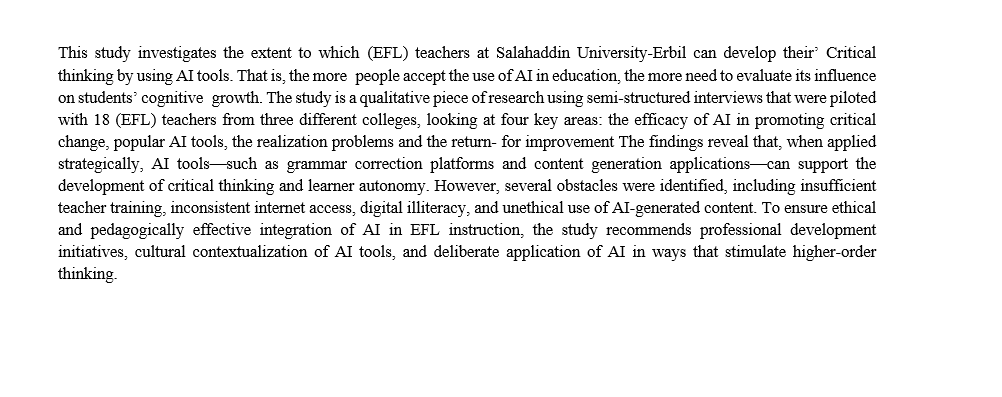
ئەم توێژینەوەیە لێکۆڵینەوە دەکات کە چۆن خوێندکارانی زمانی ئینگلیزی وەک زمانێکی بیانی لە زانکۆی سەلاحەدین-هەولێر توانای بیرکردنەوەی ڕەخنەگرانەیان لە ڕێگەی یەکخستنی ئامرازەکانی زیرەکی باشتر دەکەن. بە سەرنجدان بە زیادبوونی بەکارهێنانی ئامرازەکانی زیرەکی دەسکرد لە پەروەردەدا، لێکۆڵینەوەی زیاتر پێویستە بۆ دیاریکردنی ئەوەی کە چۆن کاریگەرییان لەسەر گەشەکردنی مەعریفی خوێندکاران هەیە. توێژینەوەکە چوار تایبەتمەندی گرنگی بەکارهێنانی زیرەکی دەسکرد لە ڕاهێنانی زماندا دیاری دەکات لەسەر بنەمای چاوپێکەوتنی نیمچە پێکهاتەیی لەگەڵ هەژدە مامۆستای زمای ئینگلیزی لە سێ کۆلێژی جیاواز: تا چەند زیرەکی دەسکرد بیرکردنەوەی ڕەخنەگرانە بەرەوپێش دەبات، ئامرازە باوەکانی زیرەکی دەسکرد، تەحەددیاتی جێبەجێکردن و پێشنیارەکان بۆ باشترکردن. دۆزینەوەکان نیشان دەدەن کە کاتێک بە شێوەیەکی ستراتیژی بەکاردەهێنرێن، ئامرازەکانی وەک پلاتفۆرمی ڕێزمان و مۆلیدەی دەق دەتوانن بیرکردنەوەی ڕەخنەگرانە و سەربەخۆیی فێرخواز بەرز بکەنەوە. بەڵام پرسەکانی وەک نەبوونی ئامادەکاری مامۆستا، ناتەبایی پەیوەندی ئینتەرنێت، نەخوێندەواری دیجیتاڵی و ئیستغلالکردنی نائەخلاقی ناوەڕۆکی دروستکراوی زیرەکی دەسکرد ئاماژەی پێکرا. بۆ دڵنیابوون لە یەکگرتنی ئەخلاقی و پێداگۆژیکی دروست، توێژینەوەکە پێشنیاری گەشەکردنی پیشەیی، پەیوەندیی کولتووری تەکنەلۆژیاکانی زیرەکی دەسکرد، و ڕەوایەتی ڕوونی بەکارهێنانی کاریگەری زیرەکی دەسکردلە هاندانی مەعریفی ڕاهێنانی زمانی ئینگلیزی وەک زمانی بیانی دەکات.
سەرچاوەکان
- Abdel-Hack, E.M. and Helwa, H.S.A.H.A. (2004) ‘Using digital storytelling and weblogs instruction to enhance EFL narrative writing and critical thinking skills among EFL majors at faculty of education’, Narrative, 5(1), pp.8–41.
- Bloom, B.S. (1956) Taxonomy of educational objectives: The classification of educational goals. Handbook I: Cognitive domain. Rev. Ed. New York: David McKay.
- Bostrom, N., 2006. AI set to exceed human brain power. CNN, 24 July. [Online] Available at: http://edition.cnn.com/2006/TECH/science/07/24/ai.bostrom/index.html [Accessed: 4 February 2025].
- Brookings, 2024. What is artificial intelligence? [Online] Available at: https ://www.brookings.edu/research/what-is-artificial-intelligence [Accessed: 10 August 2024].
- Calma, A. and Davies, M., 2021. Critical thinking in business education: Current outlook and future prospects. Studies in Higher Education, 46(11), pp.2279–2295. Available at: https://doi.org/10.1080/03075079.2020.1716324 [Accessed: 10 June 2025].
- Chou, M.H. (2020) ‘Task-supported language teaching to enhance young EFL adolescent learners’ comprehension and production of English phrasal verbs in Taiwan’, Education 3–13, 48(4), pp.455–470.
- Crevier, D. (1993) AI: The tumultuous history of the search for artificial intelligence. New York: Basic Books.
- Ennis, R.H. (1993) ‘Critical thinking assessment’, Theory into Practice, 32(3), pp.179–186. Available at: https://doi.org/10.1080/00405849309543594
- Godwin-Jones, R. (2018) ‘Using mobile technology to develop language skills and cultural understanding’, Language Learning & Technology, 22(3), pp.3–17.
- Holmes, W., Bialik, M. and Fadel, C. (2019) Artificial intelligence in education. [Online] Amazon.com. Available at: https://www.amazon.com/Artificial-Intelligence-Education-Promises-Implications/dp/1794293701 [Accessed 1 Aug. 2024].
- JISC (2023) Does ChatGPT mean the end of the essay as an assessment tool? [Online] Available at: https://www.jisc.ac.uk/news/does-chatgpt-mean-the-end-of-the-essay-as-an-assessment-tool-10-jan-2023 [Accessed 28 Mar. 2023].
- Krathwohl, D.R. (2002) ‘A revision of Bloom’s taxonomy: An overview’, Theory into Practice, 41(4), pp.212–260. Available at: https://doi.org/10.1207/s15430421tip4104_2
- Li, X. and Wang, Y. (2022) ‘Integrating artificial intelligence in EFL classrooms: Enhancing inquiry-based learning and problem-solving skills’, Journal of Educational Technology & Society, 25(3), pp.45–58.
- Mailwasher (2024) Mailwasher: Uses Bayesian techniques to learn which emails are spam and which are not. [Online] Available at: https://www.mailwasher.net [Accessed 10 Aug. 2024].
- Murawski, L.M. (2014) ‘Critical thinking in the classroom … and beyond’, Journal of Learning in Higher Education, 10, pp.25–30.
- Penkauskiené, D., Railiené, A. and Cruz, G. (2019) ‘How is critical thinking valued by the labour market? Employer perspectives from different European countries’, Studies in Higher Education, 44(5), pp.804–815. Available at: https://doi.org/10.1080/03075079.2019.1586323
- Rudolph, J., Tan, S. and Tan, S. (2023) ‘ChatGPT: Bullshit spewer or the end of traditional assessments in higher education?’, Journal of Applied Learning and Teaching, 6(1), pp.342–363. Available at: https://doi.org/10.37074/jalt.2023.6.1.9.
- Shareef, N.G., 2024. Kurdish EFL students’ perceptions towards AI-powered platforms for learning English grammar. Zanco Journal of Human Sciences, 28(3), pp.321–333. Available at: https://zancojournal.su.edu.krd/index.php/JAHS/article/download/1875/977/14700 [Accessed: 10 June 2025].
- Van Dijk, J. (2020) the digital divide. Cambridge/Medford: Polity.
- Warschauer, M. and Healey, D. (1998) ‘Computers and language learning: An overview’, Language Teaching, 31(2), pp.57–71.
- Yin, Y., Tomita, M.K. and Shavelson, R.J. (2014) ‘Using formal embedded formative assessments aligned with a short-term learning progression to promote conceptual change and achievement in science’, International Journal of Science Education, 36(4), pp.531–552.
- Zhai, C., Wibowo, S. and Li, L.D. (2024) ‘The effects of over-reliance on AI dialogue systems on students’ cognitive abilities: A systematic review’, Smart Learning Environments, 11, Article 28.
##submission.downloads##
بڵاو کرایەوە
چۆنییەتی بەکارهێنانی سەرچاوە
ژمارە
بەش
##submission.license##
##submission.copyrightStatement##
##submission.license.cc.by4.footer##