
Cognitive - Pragmatic Analysis of Conversational Strategies Used in a Selected Kurdish TV Talk Show: A Case Study of ‘Legel Ranj – with Ranj’
DOI:
https://doi.org/10.21271/zjhs.29.SpB.42Keywords:
cognitive pragmatic, conversation, conversation analysis, Kurdish TV talk show.Abstract
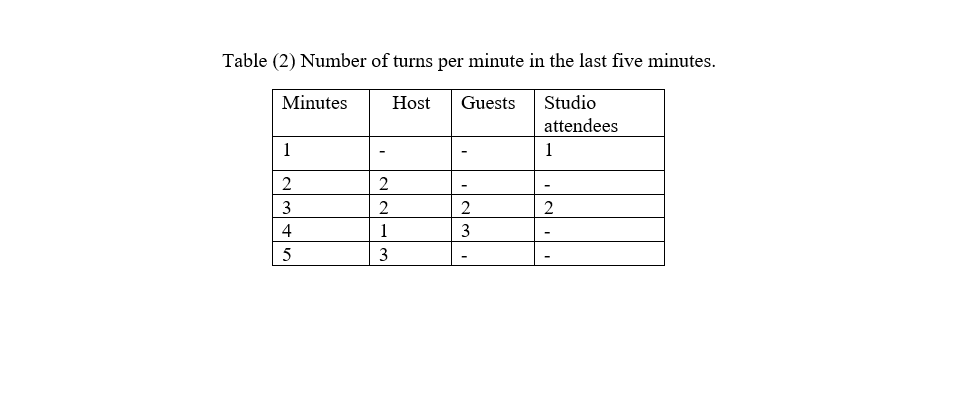
This research investigates conversational strategies in the Kurdish TV talk show “Legel – Ranj – with Ranj” from a cognitive-pragmatic perspective. The twentieth century has observed an increasing interest in talk shows that offer both information and entertainment. However, studies on the category of talk shows are limited. So, this research aims to (1) examine whether turns are evenly distributed among guests and audience members, (2) analyze how cognitive principles such as global and local strategies function within the conversation, and (3) investigate whether the host seeks to raise public awareness through the discussion. Due to the need for a comprehensive analysis, mixed methods are implemented. The global strategy is the analytical part, which was examined qualitatively. Simultaneously, a quantitative examination of the local strategy occurs. Results indicate that, at the cognitive level, maintaining a coherent and mindful conversation depends on local strategy that ensure each statement aligns with and supports the overall framework. Meanwhile, the global strategy provides the necessary structure and objectives. This combination enables the conversation to achieve its main goals and remain organized. An examination of selected excerpts from the talk reveals that the host frequently frames discussions to share insights, educate, and engage participants regarding the topic's significance. Consequently, the host seeks to enhance public awareness.
References
- Bara, B.G. (2010). Cognitive Pragmatics: The Mental Processes of Communication. Cambridge, MA: MIT Press.
- Carston, R. (2002). Thoughts and Utterances: The Pragmatics of Explicit Communication. Oxford: Blackwell.
- Clark, H.H. (1996). Cognitive Pragmatics. Cambridge, MA: MIT Press.-
- Gernsbacher, M.A. (1997). 'Maintaining One's Focus in Conversation: A Cognitive Approach', Journal of Memory and Language, 36(2), pp. 185-197.
- Martinez, E.R. (2000). Political Interview, Talk Show Interview, and Debates on British TV: A Contrastive Study of the Interactional Organization of the Three Broadcast Genres. Doctoral Thesis. University of Santiago.
- Mawi (2018), p. 101, distributes the opening, the body and the closing strategies according to the below elements.
- Rymes, B. (2009). Classroom Discourse Analysis: A Tool for Critical Reflection. Cresskill, NJ: Hampton Press.
- Sacks, H., Schegloff, E.A. & Jefferson, G. (1974). 'A Simplest Systematics for the Organization of Turn Taking in Conversation', Language, 50, pp. 696-735. in Social Interaction. New York: Free Press.
- Sperber, D. & Wilson, D. (1995). Relevance: Communication and Cognition. 2nd ed. Cambridge, MA: Harvard University Press.
Downloads
Published
How to Cite
Issue
Section
License
Copyright (c) 2025 Alan Anwar Hasan, Kavi Shakir Mohammad

This work is licensed under a Creative Commons Attribution 4.0 International License.