
The Effect of Handwriting on Developing Kurdish Undergraduate EFL Students’ Descriptive Paragraph Writing
DOI:
https://doi.org/10.21271/zjhs.30.SpB.38الكلمات المفتاحية:
Handwriting, Descriptive Paragraph, Writing Performance, Autonomy, EFL Studentsالملخص
المستلخص
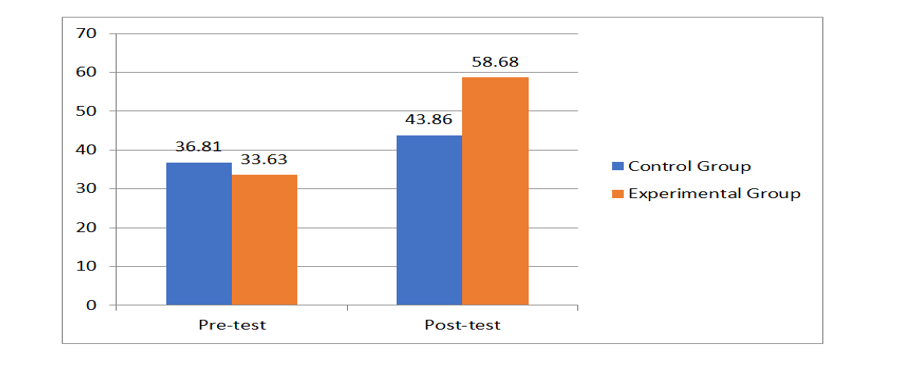
تُعدّ مهارة الكتابة من أهم المهارات التي يحتاجها طلبة اللغة الإنكليزية كلغة أجنبية للتواصل في المجال الأكاديمي وفي حياتهم المهنية المستقبلية. ومع ذلك، يعتبر العديد من الباحثين في مجال التعليم والتعلّم أن الكتابة مهارة يصعب اتقانها. تهدف هذه الدراسة إلى الكشف عن أثر استخدام تقنية الكتابة اليدوية (إعادة الكتابة) في تطوير مهارة كتابة الفقرة الوصفية لدى طلبة اللغة الإنكليزية في كوردستان. تضمنت عينة الدراسة (66) طالبًا، قتم تقسيمهم إلى مجموعتين متساويتين (33) طالبًا في كل مجموعة. فجرى تعيين المجموعة الأولى كمجموعة ضابطة تم تدريسها بالطريقة التقليدية، بينما عُيّنت المجموعة الثانية كمجموعة تجريبية، طُلب من طلابها بالإضافة إلى محتوى المقرر، كتابة مواد إضافية يدويًا مثل مقاطع الفهم القرائي والقصص القصيرة كواجبات منزلية. استخدمت منهجية البحث المختلط لغرض جمع البيانات المطلوبة، وذلك من خلال اختبارات قبليّة وبعديّة، بالإضافة إلى مقابلة جماعية مركّزة. كما استُخدمت الإحصاءات الوصفية والاستدلالية لتحليل البيانات باستخدام برنامج الحزمة الإحصائية للعلوم الاجتماعية (SPSS) ،أمّا نتائج المقابلة الجماعية فقد تم تحليلها موضوعيًا. أظهرت نتائج الاختبارات بوضوح أنه بنهاية الفصل الدراسي، تفوق طلاب المجموعة التجريبية على نظرائهم في المجموعة الضابطة في كتابة الفقرات الوصف حيث كانت قيمة الاحتمال (p. value .000) علاوة على ذلك، دعمت نتائج المقابلة الجماعية نتائج الاختبار البَعدي وأكدت الأثر الإيجابي لإدماج الكتابة اليدوية في تحسين أداء طلبة اللغة الإنكليزية في كتابة الفقرات الوصفية. كما أشارت نتائج المقابلة إلى أن إدماج الكتابة اليدوية أسهم في تعزيز استقلالية الطلبة واعتمادهم على الذات في الكتابة.
الكلمات المفتاحية: الكتابة اليدوية، الفقرة الوصفية، أداء الكتابة، الاستقلالية، طلبة اللغة الإنكليزية كلغة أجنبية.
المراجع
- Alfaruqy, D., Setyawan, H. ., and Rohman, T. N. (2022). Exploring First-Year EFL Students’ Problems in Essay Writing. ELE Reviews: English Language Education Reviews, 2(1), 1–12. https://doi.org/10.22515/elereviews.v2i1.4453
- Almarwaey, A. O. (2023). Teaching English Language Writing by Read-Write-Rewrite Based on Groups and Scientific Journey. Language Teaching Research. 27(5) 1098-1106.
- Aydogan, A. (2014). The Four Basic Language Skills , Whole Language & Intergrated Skill Approach in Mainstream University Classrooms in Turkey Hakan Aydo ğ an Associate Professor Azamat A . Akbarov. 5(9), 672–680. https://doi.org/10.5901/mjss.2014.v5n9p672
- Berninger, V. W., and Swanson, H. L. (1994). Modifying the Hayes and Flower model of writing. Developmental Review, 14(4), 445-469.
- Berninger, V. W., Abbott, R., and Raskind, W. (1997). Contributions of handwriting speed and legibility to writing quality. Journal of Educational Psychology, 89(4), 652–665.
- Berninger, V. W., Abbott, R. D., Augsburger, A., and Garcia, N. (2009). Comparison of pen and keyboard transcription modes in children with and without learning disabilities. Learning Disability Quarterly, 32(3), 123–141. https://doi.org/10.2307/27740364
- Braun, V., & Clarke, V. (2006). Using thematic analysis in psychology. Qualitative Research in Psychology, 3(2), 77–101.
- Brown, H. D. (2004). Language Assessment: Principles and Classroom Practices. Pearson Education.
- Chen, Y., Fu, S., Iversen, S. D., Smith, S. M., and Matthews, P. M. (2002). Testing for dual brain processing routes in reading: A direct contrast of Chinese character and pinyin reading using fMRI. Journal of Cognitive Neuroscience, 14(7), 1088–1098. https://doi. org/10.1162/089892902320474535
- Chicho, K. Z. H. (2022). An Analysis of Factors Influencing EFL Learners’ Writing Skills. Canadian Journal of Language and Literature Studies, 2(2), 28–38. https://doi.org/10.53103/cjlls.v2i2.38
- Connelly, V., Gee, D., and Walsh, E. (2007). A comparison of keyboarded and handwritten compositions and the relationship with transcription speed. British Journal of Educational Psychology, 77(2), 479–492. https://doi.org/10.1348/000709906X116768
- Dawadi, S., Shrestha, S., and Giri, R. A. (2021). Mixed-methods research: A discussion on its types, challenges, and criticisms. Journal of Practical Studies in Education, 2(2), 25-36. https://doi.org/10.46809/jpse.v2i2.20
- Fogassi, L., and Gallese, V. (2004). Action as a binding key to multisensory integration. In G. A. Calvert, C. Spence, & B. E. Stein (Eds.), The handbook of multisensory processes (pp. 425–441). Cambridge, Mass: MIT Press. https://doi.org/10.7551/mitpress/ 3422.003.0032.
- Graham, S., and Harris, K. R. (2000). The role of handwriting in learning to write. Journal of Educational Psychology, 92(2), 354–362.
- Graham, S. and Weintraub, N. (1996). The effects of handwriting instruction on handwriting and spelling. Reading and Writing Quarterly, 12(3), 283–304.
- Graham, S., Harris, K. R., and Fink, B. (2000). Is handwriting causally related to learning to write? Treatment of handwriting problems in beginning writers. Journal of Educational Psychology, 92(4), 620–633. https://doi.org/10.1037/0022-0663.92.4.620
- Hayes, J. R., and Flower, L. (1980). Identifying the organization of writing processes. Reading Research Quarterly, 16(2), 239-270.
- Holec, H. (1981). Autonomy and Foreign Language Learning. Oxford: Pergamon.
- Hyland, K. (2003). Second language writing. Cambridge: Cambridge University Press.
- Islam, M. S., and Gr¨onlund, Å. (2016). An international literature review of 1:1 computing in schools. Journal of Educational Change, 17(2), 191–222. https://doi.org/ 10.1007/s10833-016-9271-y
- James, K. H., and Engelhardt, L. (2012). The effects of handwriting experience on functional brain development in pre-literate children. Trends in Neuroscience and Education, 1(1), 32–42. https://doi.org/10.1016/j.tine.2012.08.001
- Jones and Christensen, 1999, Relationships Between Automaticity in Handwriting and Students’ Ability to Generate Written Text, Journal of Educational Psychology, Vol.91, No.1, 44-49. 5
- Kellogg, R. T. (1996). A model of skilled generating and editing. In C. M. MacArthur, S. Graham, & J. Fitzgerald (Eds.), Handbook of writing research (pp. 138–159). Guilford Press.
- Kiefer, M., Schuler, S., Mayer, C., Trumpp, N. M., Hille, K., and Sachse, S. (2015). Handwriting or typewriting? The influence of pen-or keyboard-based writing training on reading and writing performance in preschool children. Advances in Cognitive Psychology, 11(4), 136. https://doi.org/10.5709/acp-0178-7
- Kumar, R. (2014). Research Methodology (4th Ed.). London, SAGE.
- Longcamp, M., Zerbato-Poudou, M. T., and Velay, J. L. (2005). The influence of writing practice on letter recognition in preschool children: A comparison between handwriting and typing. Acta Psychologica, 119(1), 67–79. https://doi.org/10.1016/ j.actpsy.2004
- Mangen, A., Anda, L. G., Oxborough, G. H., and Brˇ rnnick, K. (2015). Handwriting versus keyboard writing: Effect on word recall. Journal of Writing Research, 7(2), 227–247. https://doi.org/10.17239/jowr-2015.07.02.1
- Miftah, M. Z. (2015). English Writing Skill through Writing Process Approach. Journal on English as a Foreign Language, 5(1), 9-24.
- Mohammed Ameen, C. A. and Muhammad, H. A. (2023). The Impact of Flipped Classroom Model on Kurdish EFL University Students’ Writing Skill. Zanco Journal for Humanities. 27(3). pp. 390-403.
- Mohseni, M., et al. (2015). Effects of handwriting intervention on writing speed and accuracy in Iranian elementary students. International Journal of Educational Studies, 7(4), 312-324.
- Nunan, D. (1999). Second Language Teaching and Learning. Boston, Massachusetts: Heinle and Heinle.
- Oshima, A., and Hogue, A. (2007). Introduction to academic writing (3rd ed.). Pearson Longman.
- Pepe, A., Rogers, D., and Sita, J. C. (2012). A consideration of signature complexity using simulators’ gaze behaviour. Journal of Forensic Document Examination, 22, 5–13.
- Perin, D. and Lauterbach, M (2018). Assessing Text-Based Writing of Low-Skilled College Students. International Journal of Artificial Intelligence Education. Vol. 28, pp. 56-78. DOI 10.1007/s40593-016-0122-z
- Read, J. C. (2007). A study of the usability of handwriting recognition for text entry by children. Interacting with Computers, 19(1), 57–69. https://doi.org/10.1016/j. intcom.2006.08.009
- Richard, J. C., and Renandyah, W. A. (2002). Methodology: Language Teaching, An Anthology of Current Practice. Cambridge, United Kingdom: Cambridge University Press.
- Spilling, E. F., Ronneberg, V., Rogne, W. M. and Roeser, J. (2023). Writing by Hand or Digitally in First Grade: Effects on Rate of Learning to Compose Text. Computers and Education. 198.
- Walsh, K. (2010). The importance of writing skills: Online tools to encourage success. Retrieved 27, 6, 2025, from http://www.emergingedtech. com/2010/11/the-
- Weigle, S. C. (2002). Assessing Writing: Cambridge University Press.
- Weir, Cyril. J. (2005) “Language testing and validation: An evidence-based approach”. London: Palgrave Macmillan.
- Wiley, R. W., and Rapp, B. (2021). The effects of handwriting experience on literacy learning. Psychological Science, 32(7), 1086–1103. https://doi.org/10.1177/ 0956797621993111
- Ying, Y., Huixin, Z., Yunxia, W. and Wenhui, L. (2024). The Role of Handwriting in English Word Acquisition among Elementary Students. Acta Psychologica. 246.
- Zemach, D. E., & Rumisek, L. A. (2003). College writing: From paragraph to essay. Macmillan.
- Zemlock, D., Vinci-Booher, S., and James, K. H. (2018). Visual–motor symbol production facilitates letter recognition in young children. Reading and Writing, 31, 1255–1271. https://doi.org/10.1007/s11145-018-9831-z
- Zhou, Y., and Li, H. (2018). The impact of handwriting practice on vocabulary acquisition among EFL learners. Language Learning Journal, 46(2), 193–206.
التنزيلات
منشور
كيفية الاقتباس
إصدار
القسم
الرخصة
الحقوق الفكرية (c) 2026 Almas Nasradeen Abdulrahman, Chalak Ali Mohammed Ameen, Khelan Mohammed Salih Mahmood

هذا العمل مرخص بموجب Creative Commons Attribution 4.0 International License.