
Model in ESP: Enhancing Pharmacy Students' Mastery of Medical Terminology Through Pre-Class Digital Resources and In-Class Application
DOI:
https://doi.org/10.21271/zjhs.30.2.12الكلمات المفتاحية:
Flipped classroom, ESP, Pharmacy students, medical terminologiesالملخص
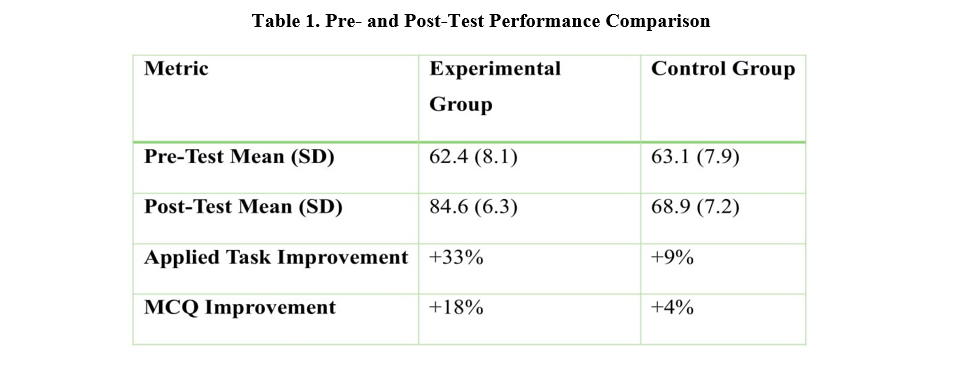
يقيس هذا البحث فعالية نموذج الفصل الدراسي المقلوب في مساعدة طلاب الصيدلة على إتقان المصطلحات الطبية ضمن برنامج اللغة الإنجليزية للأغراض الخاصة (ESP) في المعهد الوطني للتكنولوجيا (NIT). طبّق البحث أسلوبًا شبه تجريبي مختلط الأساليب، حيث قُسّم 60 طالبًا إلى مجموعتين تجريبيتين (الفصل الدراسي المقلوب) و (الفصول الدراسية الاعتيادية) الخاضعة لضوابط . شاركت المجموعات المشاركة في التجربة في أنشطة تفاعلية داخل الفصل (مثل استشارات المرضى من خلال تمثيل الأدوار) وموارد رقمية قبل الفصل (مثل محاضرات الفيديو)، بينما انضمت المجموعة الخاضعة لضوابط إلى محاضرات قياسية. قاست الاختبارات السابقة واللاحقة تطبيق المصطلحات والاحتفاظ بها، بينما بحثت مجموعات التركيز والاستطلاعات في انطباعات الطلاب. كشفت النتائج عن تحسن ملحوظ في المجموعة التجريبية، حيث ارتفعت درجات الاختبار اللاحق بنسبة 35.6% مقارنة بـ 9.2% في المجموعة الخاضعة لضوابط. وبرز التحسن بشكل خاص في الأنشطة العملية، مثل شرح المصطلحات الطبية للمرضى، مما يُظهر قوة النموذج المقلوب في ربط النظرية بالتطبيق. تم رصد تفاعل عالٍ في البيانات النوعية مع موارد ما قبل الحصص الدراسية (85% وجدوا أن مقاطع الفيديو تعاونية)، وتعززت الثقة في التواصل السريري (78%). وشملت التحديات عدم تكافؤ مشاركة المجموعات (15%) والمشكلات التقنية (25%). وخلصت الورقة البحثية إلى قدرة الفصل الدراسي المقلوب على تعزيز منهجية تعليم اللغة الإنجليزية لأغراض خاصة من خلال التعلم التطبيقي وتعزيز التفاعل النشط. كما شددت على ضرورة تدريب أعضاء هيئة التدريس وتخصيص موارد محلية للتركيز على العوائق الهيكلية. وتشير هذه النتائج إلى فهم عملي لتطوير تعليم الصيدلة، لا سيما في البيئات محدودة الموارد، وتؤكد على أهمية التواصل الفعال في مؤسسات الرعاية الصحية.
المراجع
- Abdullah, G. (2013) ‘Strategies and approaches for teaching and learning of medical terminology’, International Journal of English and Education, 2.
- Adinda, D. & Mohib, N. (2020) ‘Teaching and instructional design approaches to enhance students’ self-directed learning in blended learning environments’, Electronic Journal of eLearning, 18(2), pp. 162–174.
- Akçayır, G. & Akçayır, M. (2018) ‘The flipped classroom: A review of its advantages and challenges’, Computers & Education, 126, pp. 334–345.
- Anand, S., Singh, A., Singh, V. & Sharma, S. (2021) ‘Comprehensive assessment of the quality and reliability of the ten most-viewed YouTube videos on thoracoscopic lobectomy in children: a comparison from the available videos on a peer-reviewed platform’, Pediatric Surgery International, 37, pp. 1627–1632.
- Chabner, D.-E. (2022) Medical Terminology: A Short Course-E-Book. Elsevier Health Sciences.
- Ding, C., Li, S. & Chen, B. (2019) ‘Effectiveness of flipped classroom combined with team-, case-, lecture-and evidence-based learning on ophthalmology teaching for eight-year program students’, BMC Medical Education, 19, pp. 1–9.
- Fasih, P. (2023) ‘Teachers’ and Students’ Attitudes toward Traditional and Task-based Methods of Teaching and Assessment: Reading Comprehension and Content Material Learning’, Filologické štúdie 9 Studia Philologica, 9, pp. 39–55.
- Freeman, K., Brown, K., Miller, L., Nissly, T., Ricco, J. & Weinmann, A. (2022) ‘Knowledge Retention Using “Relay”: A Novel Active-Learning Technique’, PRiMER: Peer-Reviewed Reports in Medical Education Research, 6, p. 12.
- Hudes, R., Rich, J.B., Troyer, A.K., Yusupov, I. & Vandermorris, S. (2019) ‘The impact of memory-strategy training interventions on participant-reported outcomes in healthy older adults: A systematic review and meta-analysis’, Psychology and Aging, 34(4), pp. 587.
- Johnson, R., Turner, K., Feder, G. & Cramer, H. (2021) ‘Shared decision making in consultations for hypertension: Qualitative study in general practice’, Health Expectations, 24(3), pp. 917–929.
- Joshi, M.D. & Klausner, E.A. (2022) ‘Course design, delivery, and assessment strategies for pharmaceutical calculations course in a doctor of pharmacy program: A review’, Currents in Pharmacy Teaching and Learning, 14(4), pp. 526–535.
- Lee, J.Y., Song, Y.A., Jung, J.Y., Kim, H.J., Kim, B.R., Do, H.K. & Lim, J.Y. (2018) ‘Nurses’ needs for care robots in integrated nursing care services’, Journal of Advanced Nursing, 74(9), pp. 2094–2105.
- Li, B.-Z., Cao, N.-W., Ren, C.-X., Chu, X.-J., Zhou, H.-Y. & Guo, B. (2020) ‘Flipped classroom improves nursing students’ theoretical learning in China: a meta-analysis’, PloS One, 15(8), e0237926.
- Marcu, N.A. (2020) ‘Designing functional ESP (English for specific purposes) courses’, Procedia Manufacturing, 46, pp. 308–312.
- Martínez-Sáez, A. (2019) ‘Design and development of online learning resources to foster academic writing skills in an ESP flipped classroom context’, WCOL 2019, p. 595. Available at: https://wcol2019.ie.
- Mohammad, A., Saini, B. & Chaar, B.B. (2015) ‘Exploring culturally and linguistically diverse consumer needs in relation to medicines use and health information within the pharmacy setting’, Research in Social and Administrative Pharmacy, 11(4), pp. 545–559.
- Moll, L.C. & Whitmore, K.F. (2013) ‘Vygotsky in classroom practice: Moving from individual transmission to social transaction’, in Learning relationships in the classroom, pp. 131–155. Routledge.
- Saleem, A., Kausar, H. & Deeba, F. (2021) ‘Social constructivism: A new paradigm in teaching and learning environment’, Perennial Journal of History, 2(2), pp. 403–421.
- Senel Tekin, P., Ilgaz, H., Afacan Adanir, G., Yildirim, D. & Gülbahar, Y. (2020) ‘Flipping e-Learning for Teaching Medical Terminology: A Study of Learners' Online Experiences and Perceptions’, Online Learning, 24(2), pp. 76–93.
- SivaKumar, A. (2023) ‘Augmenting the flipped classroom experience by integrating Revised Bloom's Taxonomy: A faculty perspective’, Review of Education, 11(1), e3388.
- Zarrinabadi, N. & Ebrahimi, A. (2019) ‘Increasing peer collaborative dialogue using a flipped classroom strategy’, Innovation in Language Learning and Teaching, 13(3), pp. 267–276.
التنزيلات
منشور
كيفية الاقتباس
إصدار
القسم
الرخصة
الحقوق الفكرية (c) 2026 Hemn Mohammed Ali Mahmood

هذا العمل مرخص بموجب Creative Commons Attribution 4.0 International License.