
پەرژینە زمانیەكان لە دەقە دادوەرییەكاندا
DOI:
https://doi.org/10.21271/zjhs.30.3.4الكلمات المفتاحية:
پەرژینە زمانیەكان، زمانەوانیی دادوەری، پەرژینە زمانیەكان و تاوان، خودپارێزيی.الملخص
التحوط اللغوي في النصوص القضائية
ملخص:
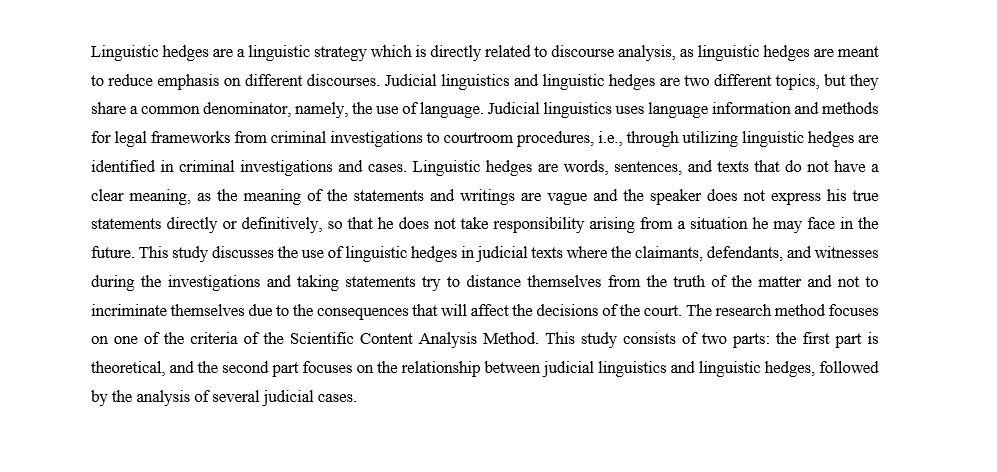
التحوط اللغوي هو إستراتيجي اللغوي، هذا الموضوع له عِلاقة مُباشرة بالتحليل الخطابي، التحوط اللغوي هو لتقليل الضغط في الخطابات المتنوعة، علم اللغة القضائية و التحوط اللغوي موضوعان مختلفان، ولكن النقطة المشتركة بينهما باستخدام اللغة، وعلم اللغة القضائية العلمية الأشكال اللغوية أو أساليب اللغة في إطار قانوني في البحوث لإجرامية، و تستخدم في إجراءات قاعة المحكمة، أي بالاستفادة من اللغة، التحوط اللغوي في التحقيقات و أضابير الإجرام، التحوط اللغوي هو الكلمات والجمل والنصوص التي لا تتضمن معاني واضحة، وأنما هذه الكتابات فيها معاني غامضة، أي حقيقة الناطقين لا يعبر هذه المعاني عن إنهاء القضايا بشكل واضح لكي لا يحمل نفسه المسؤولية مستقبلا، هذا البحث يبحث عن استخدام التحوط اللغوي في النصوص القضائية عند المدعين العامين و المتهمين و الشاهدين أثناء التحقيقات وأخذ الإفادات، يحاولون تجنب أنفسهم من حقيقة الموضوع ولكي لا يحملون أنفسهم نتائج تحقيقاتهم، نتيجة لتأثيراتها على قرارات المحكمة. تعتمد منهج هذا البحث على أحد معايير(Scientific Content Analysis method) هذا البحث يتكون من قسمين و القسم الأول نظري والقسم الثاني إلقاء الضوء على العِلاقة بين علم اللغة القضائية و التحوط اللغوي و القسم بعد ذلك قمنا تحليل بعض القضايا القضائية.
الكلمات المفتاحية: التحوط اللغوي، علم اللغة القضائي، التحوط اللغوي والجريمة، حفظ الذات.
المراجع
- بەزمانی كوردی:
- خۆشناو، نەریمان عەبدوڵڵا(2021)، پراگماتیك، چاپی یەكەم، چاپخانەی هێڤی، هەولێر.
- ڕەسول، عەبدوڵڵا حوسێن(2023)، شیكردنەوەی گوتار، چاپخانەی زانكۆی سەڵاحەددین، هەولێر.
- عەبدولعەزیز ، محەمەد حەسەن(2021) و.خۆشناو، نەریمان عەبدوڵڵا، زمانەوانیی كۆمەڵایەتی، چاپی یەكەم، چاپخانەی هێڤی، هەولێر.
- ناوخۆش، سەلام ( 2007)، فەرهەنگی گیرفانی ئۆكسفۆرد ئینگلیزی -كوردی، چاپی چوارەم، چاپخانەی پەروەردە، هەولێر.
- بەزمانی ئینگلیزی
-Ai, Pande Putu Surya, Ni Luh Nyoman Seri Malini, and Ni Wayan. (2024) "The Comparison of the Use of Lexical Hedges, Intensifiers and Super Polite Forms in CLT Approach. Volume 7(3).
-Aijmer, Karin., (2021). Hedging, Discourse Variation and. Corpus Linguistics II, 15 November.Volume 57.
-Al-Quraishy & Wudaa, S (2011). The Use of Hedging Devices in Scientific Research Papers byIraqi EFL Learners. Al-Qadisiyah Journal For Humanities Sciences, 14(1-2).
-Boginskaya, O. A., (2022). Functional categories of hedges: A diachronic study of Russian research article abstracts. Russian Journal of Linguistics, 26(3).-Brown, P. and Levinson, S.C., 1987. Politeness: Some universals in language usage (Vol. 4). Cambridge University Press.
-Coates, J., (1987). Epistemic modality and spoken discourse. Transactions of the Philological Society, 85(1).
-Crompton, P., (1997). Hedging in academic writing: Some theoretical problems. English for Specific Purposes, 16(4).
-Dubois, B. L., (2008). Something on the order of around forty to forty-four: Imprecise numerical expressions in biomedical slide talks. Language in Society, Volume 53.
-Fraser, B., (2010). Pragmatic Competence: The Case of Hedging. s.l.:Emerald Group Publishing Limited.
-Hassan, A. S. & Said,( 2020).A pragmatic study of hedges in American political editorials. International Journal of Research in Social Sciences and Humanities, 10(3).
-Holmes, J., (1995). Women, Men and Politeness. 1st ed. London: s.n.
-Houtman & Ali, . S., (2018). The History of Forensic Linguistics as an Assisting Tool in the Analysis of Legal Terms, Sriwijaya Law Review. , Sriwijaya Law Review, 2(2).
-Hyland, K., (1994). Hedging in academic writing and EAF textbooks. English for specific purposes. English for Specific Purposes, 13(3).
-Hyland, K., (1996b). Writing Without Conviction Hedging in Science Research Articles.Applied Linguistics, December, 17(4).
-Hyland, K., (1998). Hedging in Scientific Research Articles. s.l.:John Benjamins Publishing Company.
-Hyland, K., (2000). Disciplines and Discourses: Social Interactions in the Construction of Knowledge.
-Hyland, K., (2008). Meta discourse, Exploring interaction in writing. Language in Society, February, 37(1).
-Jabbar, W., (2019). "Investigating Fourth Year College Students' Awareness in the Use of Hedging and Boosting in Their Academic Research Project. Journal of Garmian University, 6(2).
-Lakoff, G., (1973). Hedges: A Study in Meaning Criteria and the Logic of Fuzzy Concepts, Papers from the Eighth Regional Meeting of the Chicago Linguistic Society. Journal of Philosophical Logic, 2(4).
-Livytska, I., (2019). The use of hedging in research articles on applied linguistics. Journal of language and cultural education, 7(1).
-Lyons, J., (1977). Semantics: Volume 2 (Vol. 2). Cambridge University Press.
-Myers, G., (1989). The pragmatics of politeness in scientific articles. Applied Linguistics, 10(1).
-Meyer, C.F., (2023). English corpus linguistics: An introduction. Cambridge University Press.
-Rounds, P., (1981). On hedging in social science written texts. University of Michigan (Mimeo).
-Sarsarabi, S.S. and Zolfaghari, S., (2021). Comparative Study of Hedges Utilization by Iranian and Native American Researchers in Applied Linguistics. Research in English Language Pedagogy, 9(Special Issue of NTLL Conference).
-Schröder, H. & Zimmer, D., (1997). Hedging Research in Pragmatics: A Bibliographical Research Guide to Hedging. In: R. Markkanen & H. Schröder, eds. Hedging and Discourse. s.l.: De Gruyter.
-Sharndama, E. C. & Panamah, J. H., (2012). Hedging in Professional Legal Texts. British Journal of Humanities and Social Sciences, 4(1), p. 41.
-Skelton, J., (1988). The care and maintenance of. ELT Journal,, 42(1), p. 37.
-Takimoto, M.(2015). A corpus-based analysis of hedges and boosters in English academic articles. Indonesian Journal of Applied Linguistics, Volume 5.
-Tannen, D., (1994). Gender and discourse. s.l.:Oxford University Press.
-Varttala, T.,(2011). Hedging in Scientifically Oriented Discourse. Exploring Variation According to Discipline and Intended Audience.Tampere University Press.
-Ventola, E., (1997). Modalization: Probability – an exploration into its role in academic writing. Culture and Styles of Academic Discourse, Volume 104.
-Weinreich, U., (1966). Universals Of Language. 2nd ed. New York: Cambridge.
-Yule, G., (1996). Pragmatics. New York: Oxford University Press..
- چاوپێكەوتن
- چاوپێكەوتن لەگەڵ (حاكم هاشم حسێن اسماعیل)، پارێزەران (هەڵەز عیماد مەجید و بڵێسە سەرهد عەزیز) لە سەرۆكایەتی دادگای تێهەڵچوونەوەی ناوچەی هەولێر، ڕێككەوتی (10/6/2024).
التنزيلات
منشور
كيفية الاقتباس
إصدار
القسم
الرخصة
الحقوق الفكرية (c) 2026 Agreen Shawkat Hadi

هذا العمل مرخص بموجب Creative Commons Attribution 4.0 International License.