
Investigating the Integration of Critical Thinking in EFL Literature Classes at University level
DOI:
https://doi.org/10.21271/zjhs.29.SpC.48Keywords:
21st-century skills, 4Cs, Critical thinking, EFL literature classes, ChallengesAbstract
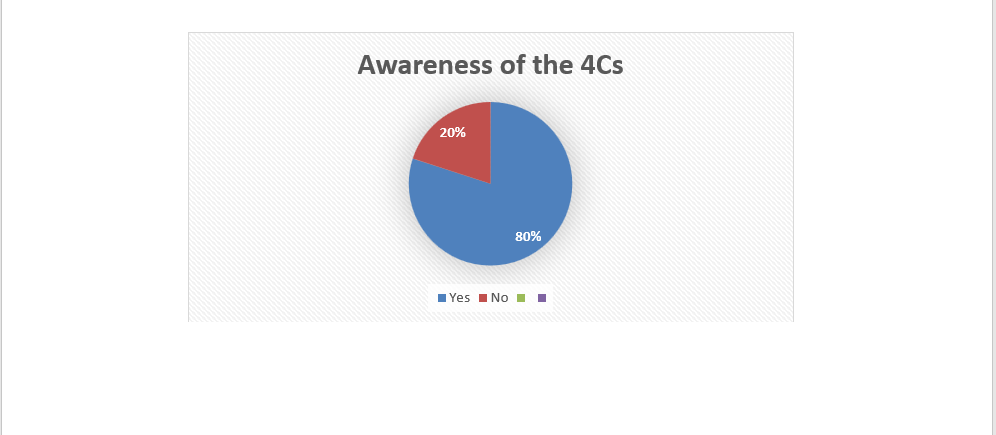
It has long been acknowledged that to prepare the students effectively to the needs of global communication and professional world, it is highly important to integrate 21st-century skills into teaching of EFL. This research study investigate the integration of the 4Cs including critical thinking skill, as a 21st century language education skill, to literary classes at the University of Duhok, Newroz and Zakho university. It also aims to determine the challenges EFL literature teachers encounter in respect to the incorporation of critical thinking skill in EFL literature classes. The study employed explanatory sequential mixed-methods design combining both quantitative and qualitative methods of data collection. A 5-point Likert scale questionnaire was given to 26 Kurdish EFL literature teachers including a structured interview addressed to 10 EFL literature teachers. The obtained data were analyzed by using SPSS version 27 software to measure their Frequency (Fr.), percentage (%), Mean (M), Standard deviation (SD) and T-test. The findings provided evidence the participants are aware of the 4Cs including critical thinking skills; however, they encountered a number of challenges in which hinder the incorporation of critical thinking in their classes. These insights emphasizes that specific professional development is necessary to assist the instructors in the process of incorporating higher-order thinking strategies in teaching of literature that would align better with literature teaching requirement to keep pace with the imperative of learning in the 21st -century.
References
- Allehyani, F. (2025). Cultivating critical thinking in EFL learning: Strategies, outcomes, and contextual considerations. Forum for Linguistic Studies, 7(4), Article 8968. https://doi.org/10.30564/fls.v7i4.8968
- Anggraeny, E., & Khongput, S. (2022). Teachers’ perceptions and practices of critical thinking instruction in Indonesian senior high schools: A case study. TEFLIN Journal: A Publication on the Teaching & Learning of English, 33(1).
- Anuradha, V., & Pushkala, R. (2020). The discrete use of storytelling approach has the potential of fostering a better learning atmosphere in the ESL classroom – A review. In B. A. L. Vijay, S. G. Mohanraj, S. Sreejana, & V. Abirami (Eds.), Innovations in language & literature (pp. 144–156). Bonfring. https://doi.org/10.13140/RG.2.2.12345
- Ayoub, M. T., Malik, A. H., Tariq, M. J., Ali, S., Abbas, N., & Ftima, M. (2024). 21st Century Skills 4 Cs in Higher Education English Language Classroom: Teachers' Perspectives. Journal of Applied Linguistics and TESOL (JALT), 7(4), 872-883.
- Azizi, M., Azizi, N., Lewandowska, E., Majda, P., & Gustave, Y. N. (2022). Cultivating critical thinking in literature classroom through poetry. Journal of Education Culture and Society, 13(1), 285-298.
- Bedir, H. (2019). Pre-service ELT teachers’ beliefs and perceptions on 21st century learning and innovation skills (4Cs). Journal of Language and Linguistic Studies, 15(1), 231-246.
- Bloom, B. S., Engelhart, M. D., Furst, E. J., Hill, W. H., & Krathwohl, D. R. (1956). Taxonomy of educational objectives: The classification of educational goals. Handbook I: Cognitive domain. Longmans, Green. https://books.google.com/books?id=Z4Z7AQAACAAJ
- Davies, P. (1990). The use of drama in English language teaching. TESL Canada Journal, 8(1), 87–99. https://teslcanadajournal.ca/index.php/tesl/article/view/581
- Elder, L. (2022). Critical Thinking. Routledge. https://doi.org/10.4324/9781138609877-REE215-1
- Erdoğan, V. (2019). Integrating 4C skills of 21st century into 4 language skills in EFL classes. International Journal of Education and Research, 7(11), 113-124.
- Essia, A. H., & Khallaf, N. M. (2025). Critical thinking: EFL teachers' perceptions and barriers. Journal of English Language Teaching and Applied Linguistics, 7(2), 240–248. https://www.researchgate.net/publication/356419011_Critical_Thinking_EFL_Teachers'_Perceptions_and_Barriers
- Facione, P. A. (1990). Critical thinking: A statement of expert consensus for purposes of educational assessment and instruction. Research findings and recommendations.
- Fernandes, R., Willison, J., Boyle, C., & Muliasari, D. (2025). Teachers’ perceptions of critical thinking facilitation in English language classes in an Indonesian high school. Educational Studies, 61(1), 22–39. https://doi.org/10.1080/00131946.2025.2467904
- Furr, M. (2004). Literature circles for the EFL classroom. In Proceedings of the 2003 TESOL Arabia Conference. Dubai, United Arab Emirates: TESOL Arabia.
- Graham, K. M., Matthews, S. D., & Eslami, Z. R. (2020). Using children’s literature to teach the 4Cs of CLIL: A systematic review of EFL studies. Latin American Journal of Content & Language Integrated Learning, 13(2), 163-189.
- Guth, A., Good, J. J., Han, E., Bailenson, J., & Peck, T. C. (2025). An evaluation of movement data analysis techniques for virtual reality [Preprint]. Stanford University, Virtual Human Interaction Lab. https://vhil.stanford.edu/sites/g/files/sbiybj29011/files/media/file/guth_ismar_2025.pdf
- Hamdameen, S. A. (2025). Assessing The Role of EFL Learning Environment in Improving Students’ Academic Performance. Zanco Journal of Human Sciences, 29(4), 309-323. https://zancojournal.su.edu.krd/index.php/JAHS/article/view/2670
- Harahap, N. A., & Fithriani, R. (2024). Indonesian pre-service teachers’ view on developing critical thinking in English language teaching. Utamax: Journal of Ultimate Research and Trends in Education, 6(1), 55–69. https://journal.unilak.ac.id/index.php/UTAMAX/article/view/19398
- Hassan, B., Rafiq-uz-Zaman, M., & Khan, Z. A. (2025). Beyond memorization: Cultivating critical thinking skills through classic literature in secondary education for the 21st-century learner. Review of Education, Administration & Law, 8(1), 115–124.
- Kadek, N., & Syamsi, V. (2023, May). Integrating literary works in an English class to improve students' critical thinking. In Proceedings of the 20th AsiaTEFL-68th TEFLIN-5th iNELTAL Conference (ASIATEFL 2022) (Vol. 749, p. 478). Springer Nature.
- Kaya, S. Ü. (2014). Using short stories in ELT/EFL classes. Başkent University Journal of Education, 1(1), 41-47.
- Khatib, M., Rezaei, S., & Derakhshan, A. (2011). Literature in EFL/ESL classroom. English Language Teaching, 4(1), 201–208. https://doi.org/10.5539/elt.v4n1p201
- Khawaji, A. (2024). Attainment of critical thinking aims through the English curriculum: A study from Jeddah, Saudi Arabia. Pakistan Journal of Life & Social Sciences, 22(1).
- Kodama, K. (2023). The effects of using literature on EFL students’ critical thinking: Fostering critical thinking skills in foreign language learning. The Journal of Literature in Language Teaching, 12(1), 3-10.
- Lai, E. R. (2011). Critical thinking: A literature review. Pearson's Research Reports, 6(1), 40-41.
- Lazar, G. (1993). Literature and language teaching: A guide for teachers and trainers. Cambridge University Press.
- Le, M. H. (2023). The application of critical thinking to short story analysis: An experiment on a new teaching process. International Journal of TESOL & Education, 3(2), 60-75.
- Magner, T. J., Saltrick, S., & Wesolowski, K. (2011). 21st century skills map. Retrieved February, 1, 2015.
- Mohammed, A. A., & Jasim, B. Y. (2024). The effect of integrating critical thinking skills on EFL university students’ performance in English literature. Journal of Tikrit University for Humanities, 31(6), 1–24. https://doi.org/10.25130/jtuh.31.6.2024.23
- Mukhamedov, A. X., & Doniyorova, S. O. (2025). Integrating critical thinking into CEFR-based communicative language teaching for 21st-century competence. Multidisciplinary Journal of Science and Technology, 5(5), 1067-1075.
- Naqvi, S. U. E. L., Sharif, I., & Khan, I. (2023). Uncovering teachers’ perceptions, overcoming barriers, and introducing an effective framework for incorporating and evaluating 21st Century skills in classrooms. Global Educational Studies Review, VIII, 8, 302-317.
- Orak, S. D., & İnözü, J. (2021). Teachers' awareness and actual practices of 21st century learning and innovation skills. International Online Journal of Education and Teaching, 8(2), 975–997. https://iojet.org/index.php/IOJET/article/view/1206
- Palinkas, L. A., Horwitz, S. M., Green, C. A., Wisdom, J. P., Duan, N., & Hoagwood, K. (2015). Purposeful sampling for qualitative data collection and analysis in mixed method implementation research. Administration and policy in mental health and mental health services research, 42, 533-544.
- Ravitz, J. (2014). A survey for measuring 21st century teaching and learning: West virginia 21st century teaching and learning survey [WVDE-CIS-28]. Department of Education, West Virginia.
- Rezaei, S., Derakhshan, A., & Bagherkazemi, M. (2011). Critical thinking in language education. Journal of Language Teaching and Research, 2(4), 769-777.
- Saleh, S. E. (2019). Critical thinking as a 21st century skill: Conceptions, implementation and challenges in the EFL classroom. European Journal of Foreign Language Teaching, 4(1), 1–16. https://doi.org/10.46827/ejfl.v4i1.2193
- Shirkhani, S., & Fahim, M. (2011). Enhancing critical thinking in foreign language learners. Procedia-Social and Behavioral Sciences, 29, 111-115.
- Shokrpour, N., Sadeghi, A., & Seddigh, F. (2013). The effect of summary writing as a critical reading strategy on reading comprehension of Iranian EFL learners. Journal of Studies in Education, 3(2), 127-138.
- St. Petersburg College. (2017). Ready, set, succeed! Quality Enhancement Plan. https://sacs.spcollege.edu/wp-content/uploads/2017/08/SPC-QEP-master_LowRes.pdf
- Stefanova, S., Bobkina, J., & Pérez, F. J. S. V. (2017). The effectiveness of teaching critical thinking skills through literature in EFL context: A case study in Spain. International Journal of Applied Linguistics and English Literature, 6(6), 252-266.
- Stevkovska, M. (2022). Using fairy tales in the language classroom with Generation Alpha. In M. Stevkovska, E. Idrizi, & I. Miftari-Fetishi (Eds.), Contemporary issues in language teaching (pp. 39–61). International Balkan University.
- Tung, C.-A., & Chang, S.-Y. (2009). Developing critical thinking through literature reading. Feng Chia Journal of Humanities and Social Sciences, 19, 287–317.
- Turouskaya, F., & Turouskaya, I. (2001). Teaching critical thinking in a foreign language. Education et Sociétés Plurilingues, 10, 51-54.
- Wei, Y. (2021). On the mixed methods designs in language education research. Learning & Education, 10(8), 159-160.
- Yadav, S. (2014). Recognizing the importance of literature and integration in ELT classes. International Journal of Education and Research, 2(9), 393-400.
- Zakaria, S. F., Tazijan, F., Mat, N. H. C., Lin, W. N. M., & Manap, M. R. (2025). Exploring the Role of Literature in Enhancing Critical Thinking and Professional Development. International Journal of Research and Innovation in Social Science, 9(2), 4415-4422.
Downloads
Published
How to Cite
Issue
Section
License
Copyright (c) 2025 Hilveen Mohammad Haji, Lazgin Kheder Barany

This work is licensed under a Creative Commons Attribution 4.0 International License.