
استخدام علامات الخطاب الاستنباطية بين اللغتين الإنجليزية والكردية في الترجمة الفورية
DOI:
https://doi.org/10.21271/zjhs.30.SpB.35الكلمات المفتاحية:
الترجمة الإنجليزية الكردية، علامات الخطاب الاستدلالي، الترجمة الفورية، استراتيجيات الترجمةالملخص
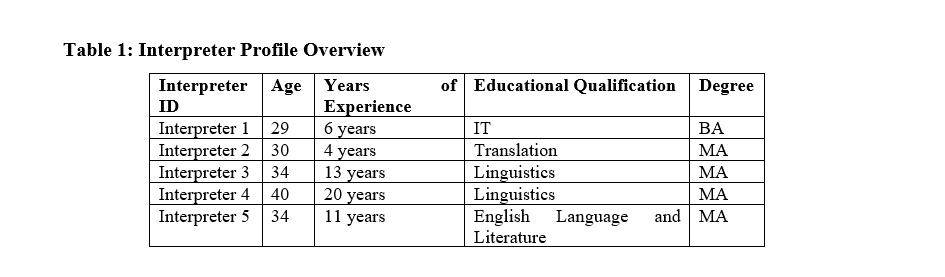
يعتبر تماسك الخطاب أمراً بالغ الأهمية في الترجمة الفورية، إذ يضمن فهم المتلقي المستهدف للتدفق المنطقي والغرض من رسالة المتحدث، وليس فقط المعنى الافتراضي. ومن بين العناصر التي تحافظ على التماسك، تُعد علامات الخطاب الاستدلالي مثل لذلك، وبالتالي، وعليه، ضرورية بشكل خاص لأنها تعبر عن المنطق، والسبب والنتيجة، والاستنتاجات. ومع ذلك، هناك ابحاث محدودة حول هذه العلامات في الترجمة الفورية من الإنجليزية إلى الكردية. تملأ هذه الدراسة هذه الفجوة من خلال استكشاف كيفية التعامل مع علامات الخطاب الاستدلالي في الترجمة الفورية من الإنجليزية إلى الكردية من خلال تحليل خطابين: قانوني وعلمي، مع 10 ترجمات شفهية فورية أنتجها خمسة مترجمون فوريون أكراد محترفون. ولفحص البيانات، استُخدم الترميز النوعي لتحديد علامات الخطاب الاستدلالي، واستُخدم تحليل مقارن للتحقيق في الاستراتيجيات التي يطبقها المترجمون الفوريون لتقديم علامات الخطاب الاستدلالي. تكشف النتائج أن الاستراتيجية السائدة كانت التكافؤ المباشر، خاصةً للعلامات المتكررة والمعترف بها، بينما طُبقت إعادة الصياغة والاستبدال للعلامات التي لا تحتوي على مرادفات مباشرة ثابتة. كان الحذف نادراً، حيث لم يُسجل سوى حالتين. تُبرز النتائج أهمية تدريب المترجمين الفوريين على إدراك الوظائف البراغماتية لعلامات الخطاب، والاعتماد على استراتيجيات مناسبة لترجمتها، مما يُقدم انعكاسات على تدريب المترجمين الفوريين ودراسات الخطاب.
المراجع
- Ahmed, A.K., 2022. Teaching and learning simultaneous interpreting at Kurdistan Region universities: Challenges and strategies. Unpublished Master’s thesis. Duhok: University of Duhok, College of Languages.
- Andersen, G., 2001. Pragmatic markers and sociolinguistic variation: A relevance-theoretic approach to the language of adolescents. John Benjamins Publishing Company: Amsterdam. Available at: https://doi.org/10.1075/pbns.84 [Accessed: 30 August 2025].
- Baker, M., 1992. In other words: A coursebook on translation. Routledge: London and New York
- Behin, B., Abedini Bonab, G., and Chehreh, M., 2010. A comparative study of discourse markers: The case of three English applied linguistic texts with their Farsi translations. The Journal of English Language Pedagogy and Practice, 3(7), pp.1-22.
- Bendazzoli, C., 2019. Discourse markers in English as a target language: The use of so by simultaneous interpreters. Textus, 1, pp.183-202.
- Blakemore, D., 2002. Relevance and linguistic meaning: The semantics and pragmatics of discourse markers. Cambridge University Press: New York. Available at: https://doi.org/10.1017/CBO9780511486456 [Accessed: 22 September 2025].
- Brinton, L. J., 1996. Pragmatic markers in English: Grammaticalization and discourse functions. Mouton de Gruyter: Berlin and New York. Available at: https://doi.org/10.1515/9783110907582 [Accessed: 30 August 2025].
- Crible, L., and Cuenca, M.-J., 2017. Discourse markers in speech: Characteristics and challenges for corpus annotation. Dialogue & Discourse, 8(2), pp.149-166. Available at: https://doi.org/10.5087/dad.2017.207 [Accessed: 3 September 2025].
- Crible, L., Abuczki, Á., Burkšaitienė, N., Furkó, P., Nedoluzhko, A., Rackevičienė, S., Valūnaitė Oleškevičienė, G., and Zikánová, Š, 2019. Functions and translations of discourse markers in TED Talks: A parallel corpus study of underspecification in five languages. Journal of Pragmatics, 142, pp.139-155. Available at: https://doi.org/10.1016/j.pragma.2019.01.012 [Accessed: 3 September 2025].
- Cuenca, M.-J., 2022. Translating discourse markers: Implicitation and explicitation strategies. In: M.-J. Cuenca and L. Degand, eds. Discourse markers in interaction: From production to comprehension. De Gruyter Mouton: Berlin, pp. 215-246. Available at: https://doi.org/10.1515/9783110790351-009 [Accessed: 19 September 2025].
- Egg, M., and Redeker, G., 2008. Underspecified discourse representation. In: A. Benz and P. Kühnlein, eds. Constraints in Discourse. John Benjamins Publishing Company: Amsterdam, pp.117-138. Available at: http://dx.doi.org/10.1075/pbns.172.06egg [Accessed: 3 September 2025].
- Fraser, B., 1999. What are discourse markers? Journal of Pragmatics, 31(7), pp.931-952. Available at: https://doi.org/10.1016/S0378-2166(98)00101-5 [Accessed: 31 August 2025].
- Furkó, B. P., 2014. Perspectives on the translation of discourse markers: A case study of the translation of reformulation markers from English into Hungarian. Acta Universitatis Sapientiae, Philologica, 6(2), pp.181-196. Available at: https://doi.org/10.1515/ausp-2015-0013 [Accessed: 1 September 2025].
- Gile, D., 2009. Basic concepts and models for interpreter and translator training. Revised ed. John Benjamins Publishing Company: Amsterdam. Available at: https://doi.org/10.1075/btl.8 [Accessed: 22 September 2025].
- Izzadeen, S.I., and Majeed, S.H., 2020. A pragmatic approach to translation: A study of deixis in the Glass Menagerie. Zanco Journal of Human Sciences, 24(4), pp.296-308. Available at: https://doi.org/10.21271/zjhs.24.4.19 [Accessed: 5 October 2025].
- Jiang, Z., and Tao, Y., 2017. Translation universals of discourse markers in Russian-to-Chinese academic texts: A corpus-based approach. Zeitschrift für Slawistik, 62(4), pp.583-605. Available at: https://doi.org/10.1515/slaw-2017-0037 [Accessed: 2 September 2025].
- Mohammadi, A. M., 2021. An analysis of the underspecifications of “and” in parallel corpora: A case study in simultaneous translation in the Iranian context. Journal of Foreign Language Research, 11(1), pp.67-80. Available at: https://doi.org/10.22059/jflr.2021.321993.828 [Accessed: 21 September 2025].
- Mohammadi, A. M., 2022. An analysis of the Iranian simultaneous interpreter’s strategies based on translation spotting: A study of inferential and temporal discourse markers. Journal of Foreign Language Research, 12(1), pp.132-152. Available at: https://doi.org/10.22059/jflr.2021.329419.880 [Accessed: 6 September 2025].
- Müller, S., 2005. Discourse markers in native and non-native English discourse. John Benjamins Publishing Company: Amsterdam.
- Namat, K. I., 2011. A contrastive study of discourse markers in English and Kurdish. Unpublished master’s thesis. University of Duhok: Duhok.
- Rozumko, A., 2021. Underspecification in the translation of discourse markers: A parallel corpus study of the treatment of connective functions of indeed in Polish translations. Journal of Pragmatics, 177, pp.122-134. Available at: https://doi.org/10.1016/j.pragma.2021.02.021 [Accessed: 1 September 2025].
- Saddiq, M. T., and Toma, S. S., 2024. Assessing university students’ competence in translating English discourse connectives into Kurdish. Academic Journal of Nawroz University, 13(1), pp.608-624.
- Saleem, H. I., and Ameen, H. H. M., 2021. Problems students face in translating discourse markers from English into Kurdish. Academic Journal of Nawroz University, 10(3), pp.1-8. Available at: https://doi.org/10.25007/ajnu.v10n3a1067 [Accessed: 22 September 2025].
- Salih, R.R. and Tahir, R.I., 2023. Challenges of translating English pragmatic markers into Kurdish by EFL students. Journal of Language Studies, 6(4), pp.139–149. Available at: https://jls.tu.edu.iq/index.php/jls/article/view/336 [Accessed: 23 January 2026].
- Schiffrin, D., 1987. Discourse markers. Cambridge University Press: New York. Available at: https://doi.org/10.1017/CBO9780511611841 [Accessed: 30 August 2025].
- Zwicky, A. M., 1985. Clitics and particles. Language, 61(2), pp.283-305. Available at: https://doi.org/10.2307/414146 [Accessed: 30 August 2025].
التنزيلات
منشور
كيفية الاقتباس
إصدار
القسم
الرخصة
الحقوق الفكرية (c) 2026 Alaa Refhat Obaid, Shivan Shlaymoon Toma

هذا العمل مرخص بموجب Creative Commons Attribution 4.0 International License.