
The Impact of Implementing the Lexical Approach on EFL Students' Writing Skills at Salahaddin University-Erbil
DOI:
https://doi.org/10.21271/zjhs.30.SpB.33Keywords:
Writing skills, CAF, the Lexical Approach, lexical chunksAbstract
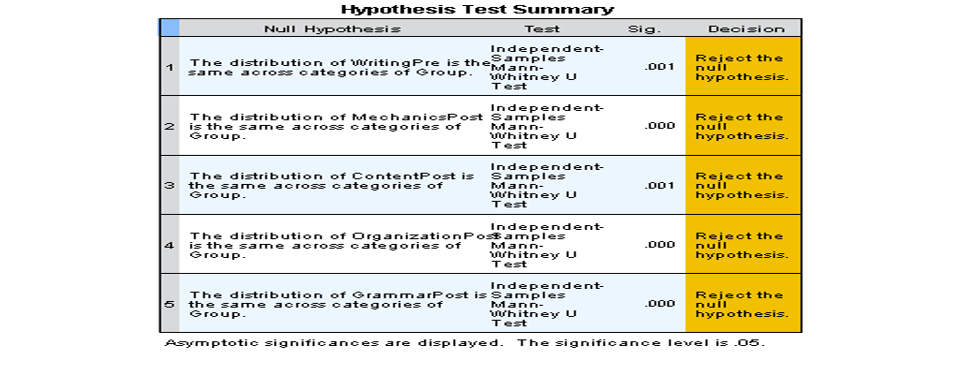
The effectiveness of the Lexical Approach in improving the writing skills of Kurdish EFL students at Salahaddin University in Erbil is examined in this study. Based on Lewis's (1993) theory that views language as "grammaticalised lexis," the study investigates whether teaching lexical chunks, collocations, and prefabricated expressions can improve general writing proficiency as well as the fundamental skills of complexity, accuracy, and fluency. With 100 second-year university students, a quasi-experimental design was adopted. The experimental group received lexical exercises aimed at improving CAF by extensive exposure to the Lexical Approach, whereas the control group received instruction using a conventional, non-lexical method. Although both groups improved their writing abilities, the experimental group performed noticeably better than the control group on tests of complexity, syntactic diversity, and the proper use of target lexical pieces in a variety of sentence constructions. Both alternative hypotheses were confirmed and relate to previous studies in similar EFL settings overseas, highlighting the didactic importance of teaching lexical phrases. However, statistical analysis using SPSS clearly showed significant improvements for the experimental group across all aspects of writing and facets of complexity, accuracy, and fluency, with a remarkably higher post-test average variation of 24.32 points between the two clusters (p < 0.001). According to the findings, the Lexical Approach is a successful and regionally appropriate method for advancing EFL writing proficiency in Kurdish colleges. Implications include improved student writing, better language learning results, and the possibility of raising the standard of English instruction in Kurdistan. Future research that replicates this work, however, would contribute to further confirming the effectiveness of this strategy in various educational settings.
References
- Abdulrahman, B. S. 2012. Effects and implications of pragmatic competence for enhancing EFL university students' written performance. UK, Milton Keynes: Author House.
- Abdul Qader, D., 2016. The role of lexical chunks in enhancing descriptive writing. Journal of Erbil University, 12(3), pp.101–120.
- Ameen, C.A.M. and Muhammad, H.A., 2023. The impact of flipped classroom model on Kurdish EFL university students’ writing skill. Zanco Journal of Humanity Sciences, 27(3), pp.390–403. https://doi.org/10.21271/zjhs.27.3.24.
- Boers, F. and Lindstromberg, S., 2009. Optimizing a lexical approach to instruction: Teaching collocations in EFL. Basingstoke: Palgrave Macmillan.
- Derseh, B. 2020. Enhancing EFL Students’ Writing Performance through Inquiry Based Learning. Italian Journal of Educational Research, (24), 138–156. https://doi.org/10.7346/SIRD-012020-P138
- Hoey, M., 2005. Lexical priming: A new theory of words and language. London: Routledge.
- Harmer, J., 2007. The practice of English language teaching. 4th ed. Harlow: Pearson Longman.
- Hyland, K., 2019. Second language writing. 3rd ed. Cambridge: Cambridge University Press.
- Kazemi, S., Ranjbar, S. and Baghban, Z., 2014. Lexical approach: A path to L2 writing fluency. Theory and Practice in Language Studies, 4(6), pp.1123–1131.
- Krashen, S.D., 1982. Principles and practice in second language acquisition. Oxford: Pergamon.
- Larsen-Freeman, D., 2006. The emergence of complexity, fluency, and accuracy in the oral and written production of five Chinese learners of English. Applied Linguistics, 27(4), pp.590–619.
- Lewis, M., 1993. The lexical approach: The state of ELT and a way forward. Hove: Language Teaching Publications.
- Lewis, M., 1997. Implementing the lexical approach: Putting theory into practice. Hove: Language Teaching Publications.
- Mahmood, D., K. 2016. An Evaluation of writing skills of EFL learners in Kurdistan region of Iraq. International journal of language and linguistics. 4(1), 14-24. https://doi.org/10.11648/j.ijll.20160401.13
- Mohammed, H., 2020. The impact of lexical chunk training on Kurdish students’ writing fluency. Journal of Language Teaching and Research, 11(2), pp.256–267.
- Momeni, F. and Ahmadian, M.J., 2022. The impact of lexical syllabus on Iranian university students’ writing proficiency. International Journal of Applied Linguistics, 32(3), pp.384–401.
- Oshima, A. and Hogue, A., 2014. Longman academic writing series 3: Paragraphs to essays. 4th ed. New York: Pearson Education.
- Omar, F. R. & Hakeem, S. H. 2022. English Writing Errors of Kurdish EFL Undergraduates: An Error Analysis. International Journal of Social Sciences & Educational Studies. 1(9).
- Schmitt, N., 2000. Vocabulary in Language Teaching. Cambridge: Cambridge University Press.
- Sinclair, J., 1991. Corpus, concordance, collocation. Oxford: Oxford University Press.
- Skehan, P., 1998. A Cognitive Approach to Language Learning. Oxford: Oxford University Press.
- Thornbury, S., 2006. An A–Z of ELT: A dictionary of terms and concepts used in English language teaching. Oxford: Macmillan.
- Willis, D., 1990. The Collins COBUILD English Course. London: Collins ELT.
- Wray, A., 2005. Formulaic language and the lexicon. Cambridge: Cambridge University Press.
- Zhao, Y., 2009. An empirical study of L2 learners’ use of lexical chunks and language production. MA Thesis. Kristianstad University College.
Downloads
Published
How to Cite
Issue
Section
License
Copyright (c) 2026 Rebin Abdulqader Azeez, Qismat Muhammed Hussin

This work is licensed under a Creative Commons Attribution 4.0 International License.