
The Relationship Between Cultural Values and Creative Accounting Factors in Financial Reports of Economic Units
##semicolon##
https://doi.org/10.21271/zjhs.29.6.12##semicolon##
Cultural values, creative accountingfactors, Iraqi Industry companies.پوختە
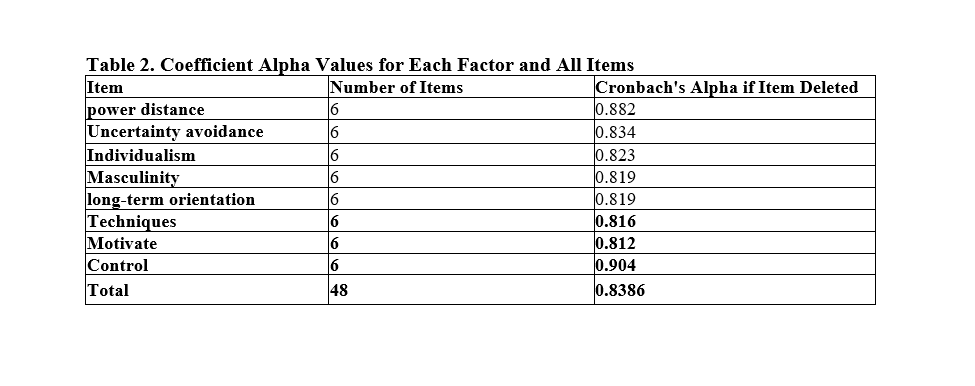
Currently, creative accounting is considered a significant indicator of firms’ business activities. This research aims to observe the impact of cultural values on creative accounting practices in financial reports. In contrast, culture can influence consumers' attitudes and behaviors. Hence, cultural values are an independent variable that consists of five items: power distance, uncertainty avoidance, individualism, masculinity, and long-term orientation. They are also examined in relation to creative accounting factors as a dependent variable that comprises techniques, motives, and control. The research covers five Iraqi industry companies. A quantitative approach was used to conduct the questionnaire, in which sixty-four questionnaires were distributed to respondents. 78 percent was the response rate out of the total number of questionnaires distributed. The SPSS method is used to analyse the questionnaire survey. As a result, it is shown that the relationship between the five dimensions of cultural value and the field of creative accounting is positive and significant. Therefore, to achieve the optimal benefit of creative accounting, steps should be taken to improve advanced techniques in accounting. The research team recommends paying attention to the influence of the culture factor in shaping and developing accounting systems in countries, as a factor independent of other environmental factors represented by the economic factor, the legal system, the political system, and professional accounting.
سەرچاوەکان
- Alshaikh, M. (2020). Developing cybersecurity culture to influence employee behavior: A practice perspective. Computers & Security, 98, 102003.
- El Diri, M., Lambrinoudakis, C., & Alhadab, M. (2020). Corporate governance and earnings management in concentrated markets. Journal of Business Research, 108, 291-306.
- Geert, H., Hofstede, H., Jan, G., & Minkov, M. (2020). Cultures and organizations: Software for the mind. McGraw-Hill.
- Gray, S. J. (1988). Towards a theory of cultural influence on the development of accounting systems internationally. Abacus, 24(1), 1-15.
- Guerra, J. M., Martínez, I., Munduate, L., & Medina, F. J. (2020). A contingency perspective on the study of the consequences of conflict types: The role of organizational culture. In Conflict in Organizations: Beyond Effectiveness and Performance (pp. 157-176). Psychology Press.
- Hadid, W., & Al-Sayed, M. (2021). Management accountants and strategic management accounting: The role of organizational culture and information systems. Management accounting research, 50, 100725.
- Hair.Jr., J. F., Black., W. C., Babin., B. J., Anderson., R. E., & L.Tatham., R. (2006). Multivariant Data Analysis. New Jersey: Pearson International Edition
- Hofstede, G. (2016). Culture's consequences: Comparing values, behaviors, institutions, and organizations across nations. Collegiate Aviation Review, 34(2), 108.
- Hofstede, G. (1980). Culture's Consequences: International Differences in Work Related Value, Beverly Hills, Sage Publications.
- Hofstede, G., Hofstede, G. J. & Minkov, M. (2010). Cultures and Organizations: Software of the Mind (Rev. 3rd ed.). New York: McGraw-Hill. For translations see www.geerthofstede.nl and “our books”.
- Khzer, Karzan Adnan & Jaf, Rizgar Abdullah Sabir(2023),THE ROLE OF INCOME SMOOTHING ON FINANCIAL PERFORMANCE INDICATORS. 3c Empresa: investigación y pensamiento crítico, ISSN-e 2254-3376, Vol. 12, Nº. 2, 2023, págs. 362-376.
- Kliestik, T., Belas, J., Valaskova, K., Nica, E., & Durana, P. (2021). Earnings management in V4 countries: The evidence of earnings smoothing and inflating. Economic Research-Ekonomska Istraživanja, 34(1), 1452-1470.
- McKearney, A., Prouska, R., Tungtakanpoung, M., & Opute, J. (2023). The influence of national culture on employee voice in small and medium enterprises: a cross-cultural perspective. Employee Relations: The International Journal, 45(2), 478-494.
- Ramayah, T.; Cheah, J.; Chuah, F.; Ting, H.; Memon, M.A. Partial Least Squares Structural Equation Modeling (PLS-SEM) Using smart PLS 3.0.; Springer: Cham, Switzerland, 2018; pp. 1–72.
- Remenaric, Banka, Ivana Kenfelja, and Ivo Mijoc. 2018. Creative accounting-motives, techniques and possibilities of prevention.
Ekonomski vjesnik 31: 193–99.
- Sabir, R. A. (2022). The effect of cultural values on the policy of income smoothing Applied Research on Sample in Kurdistan region Industrial Companies. Academic Journal of Nawroz University, 11(2), 10-22.
- Saif-Alyousfi, A.Y.H., Md-Rus, R., Taufil-Mohd, K.N., Mohd Taib, H. and Shahar, H.K. (2020), "Determinants of capital structure: evidence from Malaysian firms", Asia-Pacific Journal of Business Administration, Vol. 12 No. 3/4, pp. 283-326. https://doi.org/10.1108/APJBA-09-2019-0202
- Sugiarti, E., Finatariani, E., & Rahman, Y. T. (2021). Earning Cultural Values as A Strategic Step to Improve Employee Performance. Scientific Journal of Reflection: Economic, Accounting, Management and Business, 4(1), 221-230.
- Wronski, P. G., & Klann, R. C. (2020). Accounting conservatism and national culture. BBR. Brazilian Business Review, 17, 344-361.
##submission.downloads##
بڵاو کرایەوە
چۆنییەتی بەکارهێنانی سەرچاوە
ژمارە
بەش
##submission.license##
##submission.copyrightStatement##
##submission.license.cc.by4.footer##