
The Development of Self-Image in Children's Drawings
DOI:
https://doi.org/10.21271/zjhs.29.Con2.2Keywords:
image, self, children’s drawings.Abstract
Art is a way of the important means which translates the feelings and the feelings and thoughts of human relations of lines and spaces, colors and shapes in aesthetic formulas have unity and its distinctive character. Art is re-cultural and visual representation of the stock represented visually through the artwork.
Although the art stems from the self-vision of the man, he lets see that vision through art, and is a way of educational means you and refines human behavior in all age stages, including childhood, The stage of childhood constitute the basic building block in the formation of multiple artistic images stored in the child's memory, and these images are saturated with his contemplations and desires and multiple needs, and which can be detected by those Kherbashat on white paper surface. Vintage artistic child represents the language of spontaneous to connect with others, where change those fonts, colors, and are formed with the growth and ascent and increasing consciousness of aesthetic, cognitive, and increasingly its symbols linked to the environment, Ferssom children a way to detect with the child and inclinations and desires. Based on the current study was aimed at detecting the development of self-image in children's drawings.
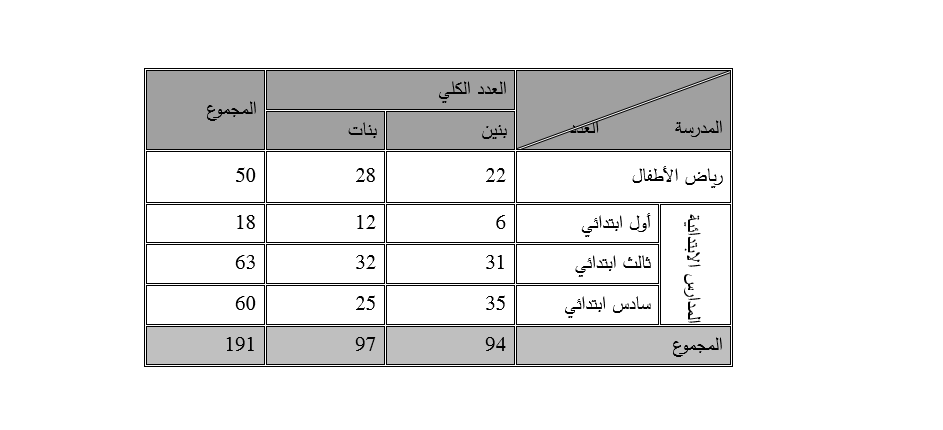
The original study was 191 children from kindergartens and primary schools within the age group (4-12 years) distributed (2) kindergarten and (3) an elementary school, with a total of boys stood in kindergarten (22) children, and total girls (28) child, bringing the total (50) children in kindergarten. Atotal of boys in all schools at the elementary level (72) and total student girls (69) pupil, and thus the total number of primary school students (141) students, and also divided by grade levels to sons and daughters. In order to achieve more accurate results, and Ostepaúa the aim of the research, the researcher decided to choose the search as a sample for the current search.
The current research has required content of children's drawings analysis tool, built form through what has been reached theoretical framework of indicators in the current research. Which included the form (3) and paragraph Head (58) subparagraph offered to a group of experts to verify the validity of the goal that put to him and then make sure validity.
The researcher used (Cooper equation, Scott equation, the arithmetic mean, Chi-square) as a means of statistical processing of data in the current discussion.
Included search results and conclusions, as well as the recommendations and proposals, and the most prominent of the conclusions of the research are:
- The self-image of the child depends on how the standard elements of different abilities that discovered, which helps adults around him for his out.
- The level of development of self-image at the top of the third phase of the first three stages, with growing self-image formative as a product of social interaction along with the internal motivation for self-assertion.
- The development of self-image of a child affected by social relations between him and his colleagues and his family. The lack of experience of the child social skills lead to low self-concept has.
- Characterize the evolution of boys' self-image have been better than the girls and the boys return to characterize the concept of a higher than girls.
And researcher pointed to a set of recommendations and proposals related to the search topic.
References
جمال الدين الأنصاري أبن منظور (2003): لسان العرب ، دار المعارف ، القاهرة.
-سميح أبو المغلى (2002): التنشئة الأجتماعية للطفل ، دار اليازوري العلمية للنشر والتوزيع ، عمان.
-سهير أحمد (2003): سيكولوجية الشخصية ، مركز الأسكندرية للكتاب ، القاهرة.
-محمود البسيوني (1985): أصول التربية الفنية , عالم الكتب , القاهرة.
-محمود البسيوني (1965): الثقافة الفنية والتربية , دار المعارف , القاهرة.
-محمود البسيوني (1984): سيكولوجية رسوم الأطفال ، ط2 ، دار المعارف ، القاهرة.
-عبد علي الجسماني (1994): سيكولوجيا الطفولة والمراهقة وحقائقها الأساسية, ط1, الدار العربية للعلوم, بيروت.
-راضي حكيم (1986): الفن عند سوزان لانجر ، دار الشؤون الثقافية العامة، بيروت.
-محمد محمود الحيلة (1998): التربية الفنية وأساليب تدريسها ، ط1 ، دار المسيرة للنشر والتوزيع والطباعة ، عمان.
-محسن الدلفي (2004): تطور شخصية الأنسان ، دار الفرقان ، عمان.
-عامرة فائق خضير الدليمي (2011): دلالات العنف في رسوم التلاميذ ، العدد (12)، دراسات تربوية ، بابل.
-جون ديوي (1963): الفن خبرة ، ط1 ، ت : زكريا ابراهيم ، دار النهضة العربية ، القاهرة.
-حامد زاهران (1997): الصحة النفسية والعلاج النفسي ، ط3 ، عالم الكتب ، القاهرة.
-حامد زهران (2000): علم النفس الأجتماعي ، عالم الكتب ، القاهرة.
-ثروت سورية (2008): مفهوم الذات ، دار غريب للطباعة والنشر ، القاهرة.
-محمود النبوي الشال (ب.ت): التذوق وتأريخ الفن ، مكتبة الضحى ، الكويت.
-جميل صليبا (1982): المعجم الفلسفي ، ج1 ، دار الكتاب اللبناني ، بيروت.
-قحطان أحمد الظاهر (2004): صعوبات التعلم ، دار وائل للطباعة والنشر والتوزيع ، عمان.
-محمد عبد الحميد (1983): تحليل المحتوى في بحوث الإعلام , ط1, دار الشرق ، الرياض.
-حنان عبد الحميد العناني (2007): الفن التشكيلي وسيكولوجية رسوم الأطفال ، ط1, دار الفكر, عمان.
-طارق بن محمد العيسى (1998): أبعاد الشخصية ومفهوم الذات ، دار النهضة العربية ، بيروت.
-غيورغي غاتشف (1990): الوعي والفن ، ت : نوفل نيوف ، سلسلة عالم المعرفة ، الكويت.
-مصطفى فهمي (1976): الصحة النفسية ، دراسة سيكولوجية في التكيف ، مكتبة اليازجي ، القاهرة.
-عبد المطلب أمين القريطي (2001): مدخل الى سيكولوجية رسوم الأطفال ، دار الفكر العربي،القاهرة.
-سيد شاكر المحاميد (2003): علم النفس الأجتماعي ، دار المكتبة الوطنية ، عمان.
-بول مسن، وآخرون (1986): أسس سيكولوجية الطفولة والمراهقة، ت: أحمد عبد العزيز سلامة, ط1، مكتبة الفلاح، الكويت.
-رياض بدري مصطفى (2005): الرسم عند الأطفال , ط1, دار الصفاء للنشر والتوزيع , عمان.
-ع. يوسف (2005) : رسومات الأطفال ؛ تطور ، تحليل ، واساليب توجه ، دار الفكر العربي.
Downloads
Published
How to Cite
Issue
Section
License
Copyright (c) 2025 Sundus Mohammed Abdul Amir

This work is licensed under a Creative Commons Attribution 4.0 International License.