
Amid Gender Inequality and Entrepreneurship, Do Working Women in Erbil Underperform?
DOI:
https://doi.org/10.21271/zjhs.29.3.16Keywords:
Gender Inequality, Female Worker, Entrepreneurism, Underperform Hypothesis, Work PerformanceAbstract
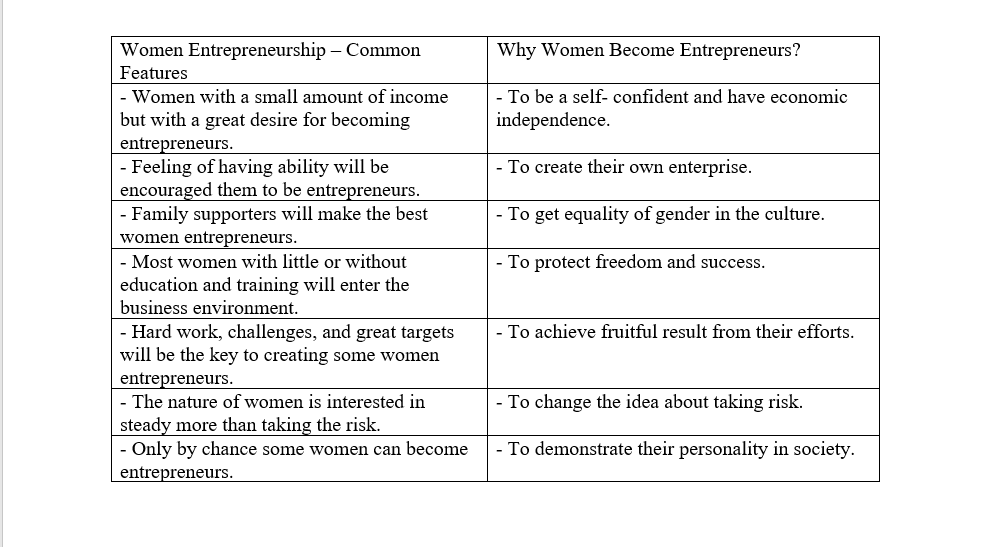
This study aims to explore the characteristics that define a successful woman entrepreneur in the business sector, examine gender inequality and the policies that affect females from childhood through stages of life, and investigate the gender underperformance hypothesis by evaluating the barriers that hinder women's progress in the business field. This research adopts a qualitative approach through conducting qualitative interviews. The participants are divided into two groups: businessmen and businesswomen in Erbil: They consist of (20) businessmen and (10) businesswomen in different business areas such as construction, real estate, service industry, managing marketing, design, beauty center, cooking and baking shop, healthcare center, education system, and socializing services. The results reveal that family and society are the most influential factors in shaping individuals' success in business. However, progression in business requires personal capability, knowledge, self-confidence, and clear direction. Moreover, the study found that childhood is a critical period for observing and developing an interest in business. The findings further disclose that the more common factors refer to coercive control from men and a lack of trust in women’s abilities. The combination of traditional female roles such as being women, wives, and mothers often limits their ability to manage a business simultaneously. The final finding highlights physiological differences between men and women as an additional factor contributing to the women's underperformance hypothesis.
References
- Andersen, H., 2001. Gender inequality and paradigms in the social sciences. Social Science Information, 40(2), pp.265-289.Schjoedt, L., (2022)
- Bullough, A., Guelich, U., Manolova, T.S. and Schjoedt, L., 2022. Women’s entrepreneurship and culture: gender role expectations and identities, societal culture, and the entrepreneurial environment. Small Business Economics, 58(2), pp.985-996.
- Dean, H., Larsen, G., Ford, J. and Akram, M., 2019. Female entrepreneurship and the metanarrative of economic growth: A critical review of underlying assumptions. International Journal of Management Reviews, 21(1), pp.24-49.
- Demartini, P., 2018. Innovative female-led startups. Do women in business underperform? Administrative Sciences, 8(4), p.70.
- Du Rietz, A. and Henrekson, M., 2000. Testing the female underperformance hypothesis. Small Business Economics, 14, pp.1-10.
- Escamilla-Solano, S., Paule-Vianez, J. and Blanco-González, A., 2022. Disclosure of gender policies: do they affect business performance?. Heliyon, 8(1), p.e08791.
- Elkafrawi, N. and Refai, D., 2022. Egyptian rural women entrepreneurs: Challenges, ambitions and opportunities. The International Journal of Entrepreneurship and Innovation, 23(3), pp.203-214
- Iman, A., Nazarov, Z. and Obydenkova, A., 2022. Female leadership, democratization, and firm innovation: social inequalities and gender issues in post-communist economies. Eastern European Economics, 60(2), pp.149-170.
- Osei, C.D. and Zhuang, J., 2020. Rural poverty alleviation strategies and social capital link: The mediation role of women entrepreneurship and social innovation. Sage Open, 10(2), p.2158244020925504.
- Rastogi, M., Baral, R. and Banu, J., 2022. What does it take to be a woman entrepreneur? Explorations from India. Industrial and Commercial Training, 54(2), pp.333-356.
- Raman, R., Subramaniam, N., Nair, V.K., Shivdas, A., Achuthan, K. and Nedungadi, P., 2022. Women entrepreneurship and sustainable development: bibliometric analysis and emerging research trends. Sustainability, 14(15), p.9160.
- Reilly, A., Jones, D., Rey Vasquez, C. and Krisjanous, J., 2016. Confronting gender inequality in a business school. Higher Education Research & Development, 35(5), pp.1025-1038.
- Roberts, R.E., 2020. Qualitative Interview Questions: Guidance for Novice Researchers. Qualitative Report, 25(9).
- Thébaud, S., 2015. Business as plan B: Institutional foundations of gender inequality in entrepreneurship across 24 industrialized countries. Administrative science quarterly, 60(4), pp.671-711.
- Watson, J., 2002. Comparing the performance of male-and female-controlled businesses: relating outputs to inputs. Entrepreneurship theory and practice, 26(3), pp.91-100.
- Zolin, R., Stuetzer, M. and Watson, J., 2013. Challenging the female underperformance hypothesis. International Journal of Gender and Entrepreneurship, 5(2), pp.116-129.
Downloads
Published
How to Cite
Issue
Section
License
Copyright (c) 2025 Korazon Talib Abdullah

This work is licensed under a Creative Commons Attribution 4.0 International License.