
The Impact of Student-Centered Approach on Kurdish EFL University Students’ Speaking Skills
DOI:
https://doi.org/10.21271/zjhs.30.SpB.37Keywords:
Academic speaking skills, EAP (English for Academic Purposes), ELT, Kurdish EFL university students, Student-centered approach.Abstract
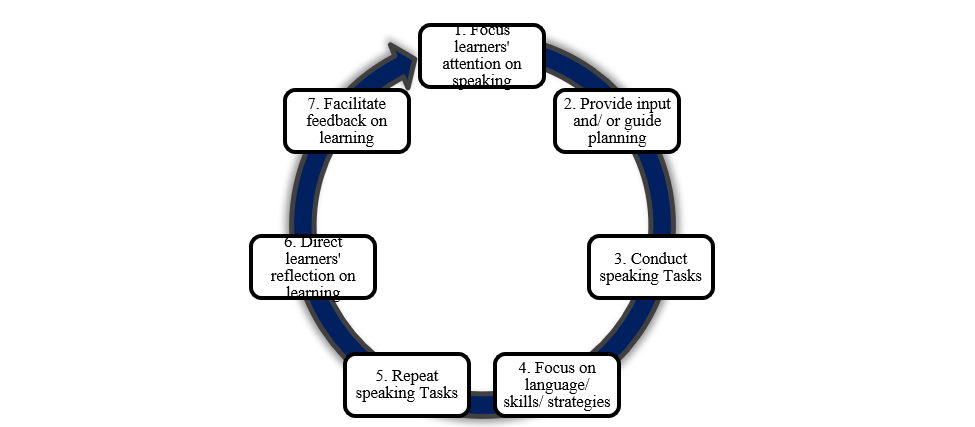
This study investigates the impact of a student-centered approach (SCA) on Kurdish EFL university students’ academic speaking skills. This topic is significant because there are theoretical and empirical gaps in the existing literature. While prior research in the Kurdistan Region of Iraq (KRI) has focused on general English (EGP), little has addressed English for Academic Purposes (EAP) and academic speaking skills in particular. In fact, no studies have provided a practical and replicable step by step SCA framework. Furthermore, existing research has failed to accurately and systematically measure both objective performance through tests and subjective learner perceptions through questionnaires. Using a quantitative research design, this study employed a 12-week intervention with 45 students from the University of Sulaimani, College of Dentistry, Department of Basic Sciences, split into an experimental group (SCA) and a control group (TCA). The findings show that the SCA was more effective numerically than the traditional TCA across all measured components. But the fluency and coherence component was the only component with a statistically significant improvement in the experimental group compared to the control group. This study fills a critical gap by providing a tailored, five-step SCA model to give teachers clearly defined classroom practices. This work also reveals a warning: while the SCA is highly effective, it may foster overestimation or overconfidence without actual competence. Ultimately, this paper provides an evidence-based pedagogical background for enhancing academic speaking proficiency in the KRI context.
References
- Al Bajalani, F.R.Hasan. and Kiani, M. (2018). The Implementation of the Learner-Centered Instruction at Knowledge University. Journal of Raparin University, 5(15), pp.43–58.
- Arbain, A. and Nur, D.R. (2017). Techniques for Teaching Speaking Skill in Widya Gama Mahakam University. Script Journal: Journal of Linguistic and English Teaching, 2(1), pp.13–25. doi:https://doi.org/10.24903/sj.v2i1.80.
- Awla, N.J. and Haji, N.M. (2023). Investigating The Implementation of Student-centered Approach in EFL Speaking Classroom. Journal of University of Duhok, 26(1), pp.750–767. doi:https://doi.org/10.26682/hjuod.2023.26.1.47.
- Azizi, Z., Namziandost, E. and Ashkani, P. (2022). Active Learning as an Approach to Fostering EFL Learners’ Speaking Skills and Willingness to Communicate: A Mixed-methods Inquiry. ISSUES IN LANGUAGE TEACHING (ILT), 11(2), pp.93–128. doi:https://doi.org/10.22054/ilt.2023.70542.744.
- Barnsley, L., Lyon, P.M., Ralston, S.J., Hibbert, E.J., Cunningham, I., Gordon, F.C. and Field, M.J. (2004). Clinical skills in junior medical officers: a comparison of self-reported confidence and observed competence. Medical Education, 38(4), pp.358–367. doi:https://doi.org/10.1046/j.1365-2923.2004.01773.x.
- Chaney, A.L. and Burk, T.L. (1998). Teaching oral communication in grades K-8. Boston: Allyn And Bacon.
- Chang, A. and Alhusna, A. (2022). Improving Students’ Speaking Ability and Willingness to Communicate through Joining English Debating Community. BULLET : Jurnal Multidisiplin Ilmu, [online] 1(04), pp.526–530. Available at: https://journal.mediapublikasi.id/index.php/bullet/article/view/756 [Accessed 13 Aug. 2025].
- Cornelius-White, J.H.D. and Harbaugh, A.P. (2010). Learner-centered instruction : building relationships for student success. Thousand Oaks, Calif.: Sage Publications.
- Derakhshan, A., Khalili, A.N. and Beheshti, F. (2016). Developing EFL learner’s speaking ability, accuracy and fluency. English Language and Literature Studies, 6(2), pp.177–186. doi:https://doi.org/10.5539/ells.v6n2p177.
- Eva, K.W., Cunnington, J.P.W., Reiter, H.I., Keane, D.R. and Norman, G.R. (2004). How Can I Know What I Don’t Know? Poor Self Assessment in a Well-Defined Domain. Advances in Health Sciences Education, 9(3), pp.211–224. doi:https://doi.org/10.1023/b:ahse.0000038209.65714.d4.
- Goh, C.C.M. and Burns, A. (2012). Teaching Speaking: A Holistic Approach. Cambridge: Cambridge University Press.
- Haji, R.M., Mohammed, R.A. and Husamalddin , A.H. (2025). Challenges and solutions in transitioning to student-centred learning: insights from university lecturers in the Kurdistan Region of Iraq. Journal of Further and Higher Education, pp.1–16. doi:https://doi.org/10.1080/0309877X.2025.2546914.
- Kassem, H.M. (2018). The impact of student-centered instruction on EFL learners’ affect and achievement. English Language Teaching, 12(1), pp.134–153. doi:https://doi.org/10.5539/elt.v12n1p134.
- Kruger, J. and Dunning, D. (1999). Unskilled and unaware of it: How difficulties in recognizing one’s own incompetence lead to inflated self-assessments. Journal of Personality and Social Psychology, 77(6), pp.1121–1134. doi:https://doi.org/10.1037/0022-3514.77.6.1121.
- Lam, Y.K.W. (2006). Assessing the effects of ESL oral communication strategy training: A multi-method approach. In: Paper presented at the Joint Conference of AAAL and ACLA/CAAL 2006, Montreal, Quebec..
- Larasati, F. (2018). Student centered learning: an approach to develop speaking skill in EFL classroom. English Community Journal, 2(1), pp.153–157. doi:https://doi.org/10.32502/ecj.v2i1.1004.
- Liew, H.S. and Aziz, A.A. (2022). Systematic Review on Speaking Skill Teaching Approaches in the ESL / EFL Classroom: Before and During Covid 19. International Journal of Academic Research in Progressive Education and Development, [online] 11(1), pp.216–234. Available at: https://doi.org/10.6007/ijarped/v11-i1/11677 [Accessed 13 Aug. 2025].
- Maasin-Ceballos, M.J. and Ceballos, R.F. (2018). Learner-Centered Approaches: Their Effect on the Oral Fluency of Students. Journal of Language and Education, 4(1), pp.6–17. doi:https://doi.org/10.17323/2411-7390-2018-4-1-6-17.
- Mahdjoubi, A. and Tibba, F. (2017). Enhancing Students’ Speaking Skill through Learner-Centered Instruction approach Case Study: 1st year LMD Students of English at Ahmed Draia University of Adrar. [Master’s thesis] Available at: https://dspace.univ-adrar.edu.dz/jspui/bitstream [Accessed 9 Aug. 2025].
- Manurung, K. (2015). Improving the Speaking Skill Using Reading Contextual Internet-based Instructional Materials in an EFL Class in Indonesia. Procedia - Social and Behavioral Sciences, 176, pp.44–51. doi:https://doi.org/10.1016/j.sbspro.2015.01.442.
- Megawati, F. and Mandarani, V. (2016). Speaking Problems in English Communication. ELTiC CONFERENCE, [online] 1(1), pp.1–8. Available at: https://eproceedings.umpwr.ac.id/index.php/eltic/article/view/519 [Accessed 13 Aug. 2025].
- Mohamedamin, A.A., Ghafar, Z.N., Mamnd, V.F. and Jumaa, E.M. (2025). The Effect of Communicative Language Teaching on Kurdish EFL Learners’ Speaking Skills in Soran Independent Administration. JOURNAL OF DIGITAL LEARNING AND DISTANCE EDUCATION, 4(2), pp.1520–1526. doi:https://doi.org/10.56778/jdlde.v4i2.531.
- Molteni, V.E. and Chan, E.K. (2015). Student Confidence/Overconfidence in the Research Process. The Journal of Academic Librarianship, 41(1), pp.2–8. doi:https://doi.org/10.1016/j.acalib.2014.11.012.
- Nonkukhetkhong, K., Baldauf Jr., R.B. and Moni, K. (2006). Learner centeredness in teaching English as a foreign language: Teachers’ voices. In: Paper presented at the 26th Annual Thai TESOL International Conference: Teaching, Learning, Researching: Three Pillars of TESOL. 26 Thai TESOL International Conference. Thailand: Thailand TESOL, pp.1–9.
- Qamar, M.B. (2016). The Impact of Learner’s Autonomy on Teaching Oral Skills (Speaking Skills) in an EFL Classroom. Journal of Language Teaching and Research, 7(2), p.293. doi:https://doi.org/10.17507/jltr.0702.07.
- Renandya, W.A. and Nguyen, M.T.T. (2022). Teaching speaking in L2 contexts. In: E. Hinkel , ed., Handbook of practical second language teaching and learning. [online] Routledge, pp.269–280. doi:https://doi.org/10.4324/9781003106609-22.
- Richards, J.C. and Renandya, W.A. (2002). Methodology in language teaching : an anthology of current practice. New York, N.Y.: Cambridge University Press.
- Zare-Behtash, E., Khoshsima, H. and Sarlak, T. (2016). The Effect of Project Work on the Speaking Ability of Iranian EFL beginner Students. Journal of Applied Linguistics and Language Research, 3(1), pp.167–177.
- Zohrabi, M., Torabi, M.A. and Baybourdiani, P. (2012). Teacher-centered and/or Student-centered Learning:English Language in Iran. English Language and Literature Studies, 2(3), pp.18–30. doi:https://doi.org/10.5539/ells.v2n3p18.
Downloads
Published
How to Cite
Issue
Section
License
Copyright (c) 2026 Shakar Salah Rahim, Twana Saadi Hamid

This work is licensed under a Creative Commons Attribution 4.0 International License.