Evolutionary Leadership of Directors and its relationship to the organizational capabilities of the Directorate of Sports and Scouting Activities in Erbil Governorate from the point of view of its sport
DOI:
https://doi.org/10.21271/zjhs.29.Con2.15Keywords:
Developmental Leadership; organizational capabilities; Directorate of Scouting and Sports.Abstract
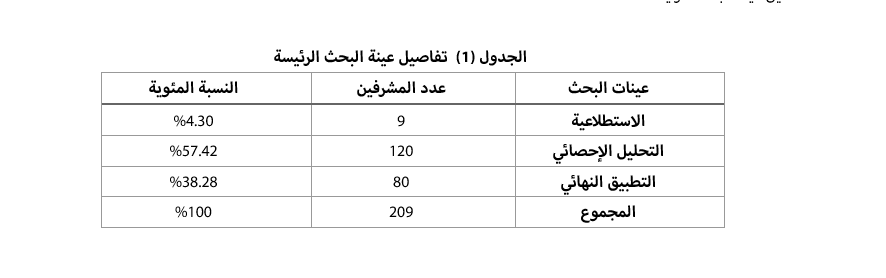
The research aimed to determine the nature of the relationship between the evolutionary leadership of the director and the organizational capabilities possessed by the Directorate of Sports and Scout Activities in Erbil Governorate, after identifying the level of each, and in order to reach the required results, the researcher followed the descriptive approach in the survey method and the method of correlational relations, and the researcher identified the research community with sports supervisors working in the Directorate of Sports and Scout Activities in Erbil Governorate, who number (209) supervisors, and for the limited community of the researcher, the researcher chose them all to form the main research sample, After that, this sample was divided into three subgroups randomly, the first group included (9) supervisors and was called the exploratory research sample, while the second group included (120) supervisors and was called the statistical analysis sample, and the third group included (80) supervisors and was called the final application sample, and to obtain the data, the researcher prepared two measurement tools, the first tool measures the level of developmental leadership of the director of sports and school activity with a number of paragraphs (14) paragraphs, and the second measures the level of organizational capabilities of the Directorate of Sports Activity And scout with the number of paragraphs (14) paragraphs, and both tools are measured from the point of view of the supervisors of technical sports working in the Directorate of Sports and Scouting Activity, and the researcher suggested alternatives to a five-way answer according to the Likert scale, which is (I agree a lot, I agree, I agree somewhat, I do not agree, I do not agree much), and after applying the two tools and receiving the answers, the results were counted, analyzed and processed statistically by (percentage, arithmetic mean, standard deviation, simple correlation coefficient (Pearson), Spearman-Brown equation, hypothetical mean, test (T) for an independent sample), and through the results obtained, a set of conclusions were reached, namely:
- The sports and scout activity manager has an average level of evolutionary leadership characteristics from the point of view of sports technical supervisors.
- The Directorate of Sports and Scouting Activity needs to have a higher organizational capacity from the point of view of sports technical supervisors.
- The relationship between the developmental Leadership of the Director of Sports and Scouting Activities and the organizational capabilities in the Directorate is moral and positive.
References
- الراوي, ف. ق. (2017). أثر ممارسات إدارة الموارد البشرية في القدرات التنظيمية-دراسة تطبيقية في البنوك التجارية الأردنية. جامعة الشرق الأوسط.
- داغر, ح. ف. (2020). مدى إسهام القدرات التنظيمية الديناميكية في إدارة المواهب البشرية: دراسة تحليلية لآراء عينة من القيادات الإدارية في رئاسة جامعة الموصل. مجلة علوم الاقتصاد والإدارة، , 26(120), 296–316. https://doi.org/10.33095/jeas.v26i120.1918
- Abreu Pederzini, G. D. (2020). Realistic egocentrism: caring leadership through an evolutionary lens. Culture and Organization, 26(5–6), 372–387. https://doi.org/10.1080/14759551.2019.1637875
- Amin, A. M., Raharja, S. J., Tahir, R., & Muhyi, H. A. (2023). Determinants of Organizational Capabilities and Its Impact on Corporate Performance in the Current Era of Big Data. Journal of System and Management Sciences, 13(2), 357–369. https://doi.org/10.33168/JSMS.2023.0225
- Anugwu, C. C., Nwosu, C. K., & Okoli, I. E. N. (2021). Effect of Organizational Capability on Firms Growth: Implications on SMEs in Anambra State, Nigeria. European Journal of Business and Management Research, 6(5), 9–14. https://doi.org/10.24018/ejbmr.2021.6.5.1050
- Benmira, S., & Agboola, M. (2021). Evolution of leadership theory. BMJ Leader, 5(1), 1–3. https://doi.org/10.1136/leader-2020-000296
- Bezerra, M. C. da C., Gohr, C. F., & Morioka, S. N. (2020). Organizational capabilities towards corporate sustainability benefits: A systematic literature review and an integrative framework proposal. Journal of Cleaner Production, 247, 119114. https://doi.org/10.1016/j.jclepro.2019.119114
- Bor, A. (2020). Evolutionary leadership theory and economic voting: Warmth and competence impressions mediate the effect of economic perceptions on vote. Leadership Quarterly, 31(2), 1–18. https://doi.org/10.1016/j.leaqua.2019.05.002
- Corrales-Estrada, A. M., Gómez-Santos, L. L., Bernal-Torres, C. A., & Rodriguez-López, J. E. (2021). Sustainability and Resilience Organizational Capabilities to Enhance Business Continuity Management: A Literature Review. Sustainability, 13(15), 8196. https://doi.org/10.3390/su13158196
- Darnell, S. (2021). EVOLUTIONARY PSYCHOLOGY LEADERSHIP THEORY AND THE PERCEPTION OF LEADERSHIP. AURORA UNIVERSITY.
- Delle, E., & Searle, B. (2022). Career Adaptability: The Role of Developmental Leadership and Career Optimism. Journal of Career Development, 49(2), 269–281. https://doi.org/10.1177/0894845320930286
- Dev, S. S., Gill, A., & Singh, S. (2018). A Research on Organizational Capability and Their Strategic Impact on Manufacturing Industry. Asian Review of Mechanical Engineering, 7(2), 70–75. https://doi.org/10.51983/arme-2018.7.2.2445
- Garfield, Z. H., Hubbard, R. L., & Hagen, E. H. (2019). Evolutionary Models of Leadership: Tests and Synthesis. Human Nature, 30(1), 23–58. https://doi.org/10.1007/s12110-019-09338-4
- Hindasah, L., & Nuryakin, N. (2020). The relationship between organizational capability, organizational learning and financial performance. Journal of Asian Finance, Economics and Business, 7(8), 625–633. https://doi.org/10.13106/JAFEB.2020.VOL7.NO8.625
- Joseph-Richard, P., Edwards, G., & Hazlett, S. A. (2021). Leadership development outcomes research and the need for a time-sensitive approach. Human Resource Development International, 24(2), 173–199. https://doi.org/10.1080/13678868.2020.1815155
- Kadiyono, A. L., Sulistiobudi, R. A., Haris, I., Wahab, M. K. A., Ramdani, I., Purwanto, A., Mufid, A., Muqtada, M. R., Gufron, M., Nuryansah, M., Ficayuma, L. A., Fahlevi, M., & Sumartiningsih, S. (2020). Develop leadership style model for indonesian teachers performance in education 4.0 era. Systematic Reviews in Pharmacy, 11(9), 363–373. https://doi.org/10.31838/srp.2020.9.52
- Kjellström, S., Stålne, K., & Törnblom, O. (2020). Six ways of understanding leadership development: An exploration of increasing complexity. Leadership, 16(4), 434–460. https://doi.org/10.1177/1742715020926731
- Lee, Y.-D., Chen, P.-C., & Su, C.-L. (2020). The Evolution of the Leadership Theories and the Analysis of New Research Trends. International Journal of Organizational Innovation, 12(3), 88–104. http://ezproxy.liberty.edu/login?url=https://search.ebscohost.com/login.aspx?direct=true&db=bth&AN=140949562&site=ehost-live&scope=site
- Nghe, M., Hart, J., Ferry, S., Hutchins, L., & Lebet, R. (2020). Developing leadership competencies in midlevel nurse leaders: An innovative approach. Journal of Nursing Administration, 50(9), 481–488. https://doi.org/10.1097/NNA.0000000000000920
- Palencia, D. B., Lopez-Barraza, L., & Jimenez, J. M. (2022). Organizational capabilities and competitive strategies in a developing country. An empirical analysis. Procedia Computer Science, 210(C), 358–362. https://doi.org/10.1016/j.procs.2022.10.164
- Pascale, A. B., & Ohlson, M. (2020). Gendered Meanings of Leadership: Developing Leadership Through Experiential Community-Based Mentoring in College. Journal of Experiential Education, 43(2), 171–184. https://doi.org/10.1177/1053825920905122
- Rehman, S., Mohamed, R., & Ayoup, H. (2019). The mediating role of organizational capabilities between organizational performance and its determinants. Journal of Global Entrepreneurship Research, 9(1). https://doi.org/10.1186/s40497-019-0155-5
- Weber, M., Engert, M., Schaffer, N., Weking, J., & Krcmar, H. (2023). Organizational Capabilities for AI Implementation—Coping with Inscrutability and Data Dependency in AI. Information Systems Frontiers, 25(4), 1549–1569. https://doi.org/10.1007/s10796-022-10297-y
- Yu, X. M., Chen, K., & Liu, J. T. (2022). Exploring How Organizational Capabilities Contribute to the Performance of Social Enterprises: Insights from China. Sustainability (Switzerland), 14(7). https://doi.org/10.3390/su14074363
Downloads
Published
How to Cite
Issue
Section
License
Copyright (c) 2025 Soran karim Baba

This work is licensed under a Creative Commons Attribution 4.0 International License.